Ladybirds and their larvae, as well as (some) hoverfly and lacewing larvae: sworn enemies of aphids and rather voracious critters – we are talking dozens to hundreds victims a day. Add to those parasitoid wasps that lay their eggs in the aphids’ bodies, turning them into shiny little golden globes, and you have an arsenal to protect your plants, if only your garden is enticing enough for them to come and stay.
Apologies for making a point of this before proceeding, but I still see too many bee hotels in pristine courtyards immaculately weed-free: bugs need not only a home with the appropriate environmental conditions (housing materials, right exposure, etc) but regular food supplies. When they go hunting, it might take a while to find pests that are not in their immediate surroundings, as they will first stop at the closest buffet… and if ever they get to a buffet that is further away, it might take a while for them to build up numbers.
How can you tell the ‘good’ bugs apart from the ‘bad’ ones? Given the amount of posts I see in the groups I am in, where people get scared about anything they see on their plants, I think it rather important to show exactly how the aforementioned bugs look like throughout their lifecycle, which incidentally in all their cases is of the kind EGG – LARVA – PUPA – IMAGO (aka adult).
I am afraid I do not have any pictures of the eggs of any of these insects, but you can search for them online. Without a magnifying lens, most eggs look pretty much the same; they are often laid on the underside of leaves or on petioles and stems, singly or in groups, except for those of the parasitoid wasps that are laid singly inside an aphid, over and over again.
Ladybirds (family Coccinellidae)
Once they hatch from their eggs, a phenomenon I was never lucky enough to observe, the ladybird larvae are minute (they did come out of an egg that was maybe one mm in size, right?). They grow in size progressively as they feed: in fact, they go through four instars, or stages of growth. Their body shape remains the same throughout and it is quite unlike the adult bug: they look more like little dragons, black or grey with varying amounts and patterns of colourful dots depending on the species. Some pictures below.
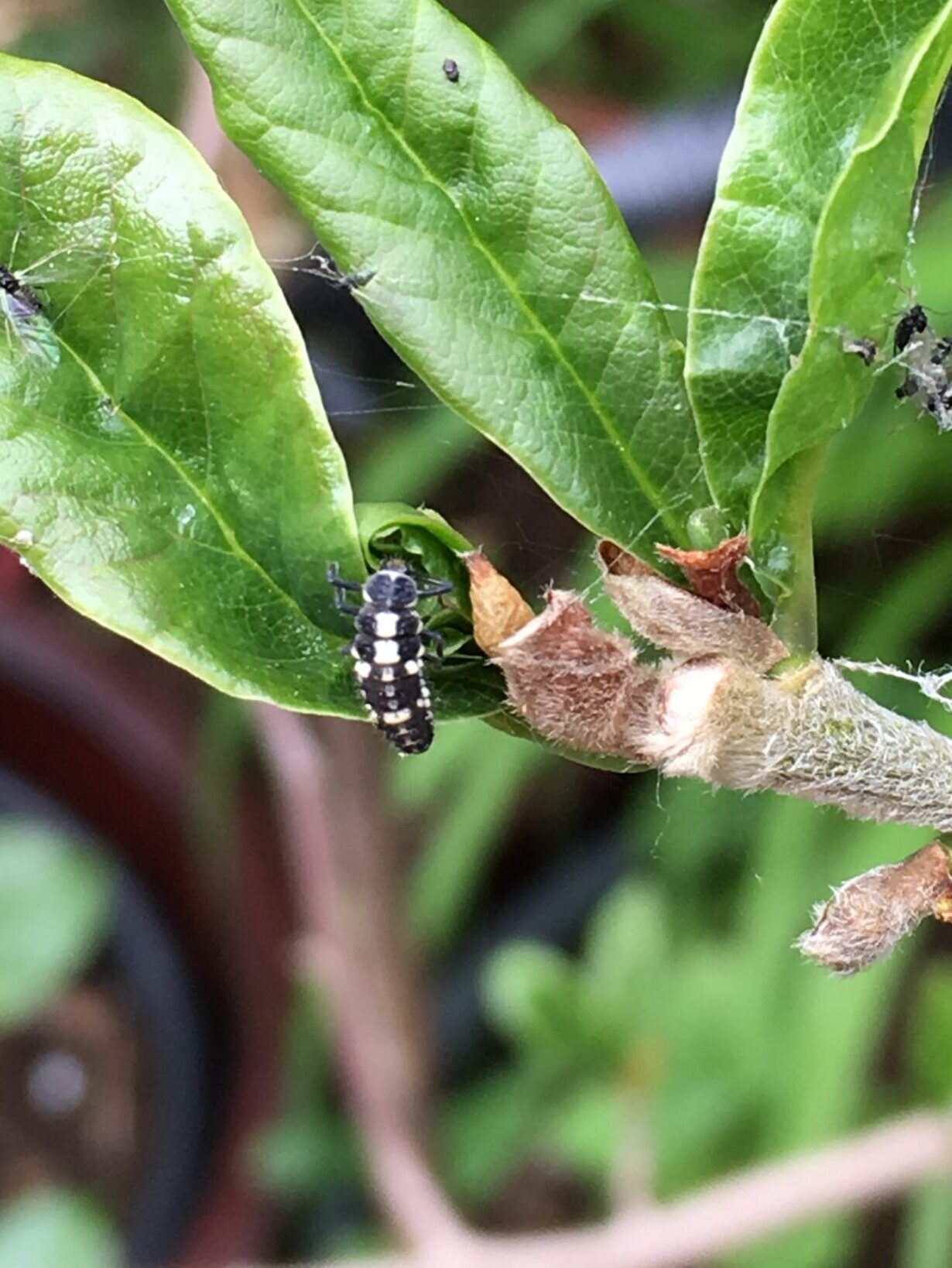
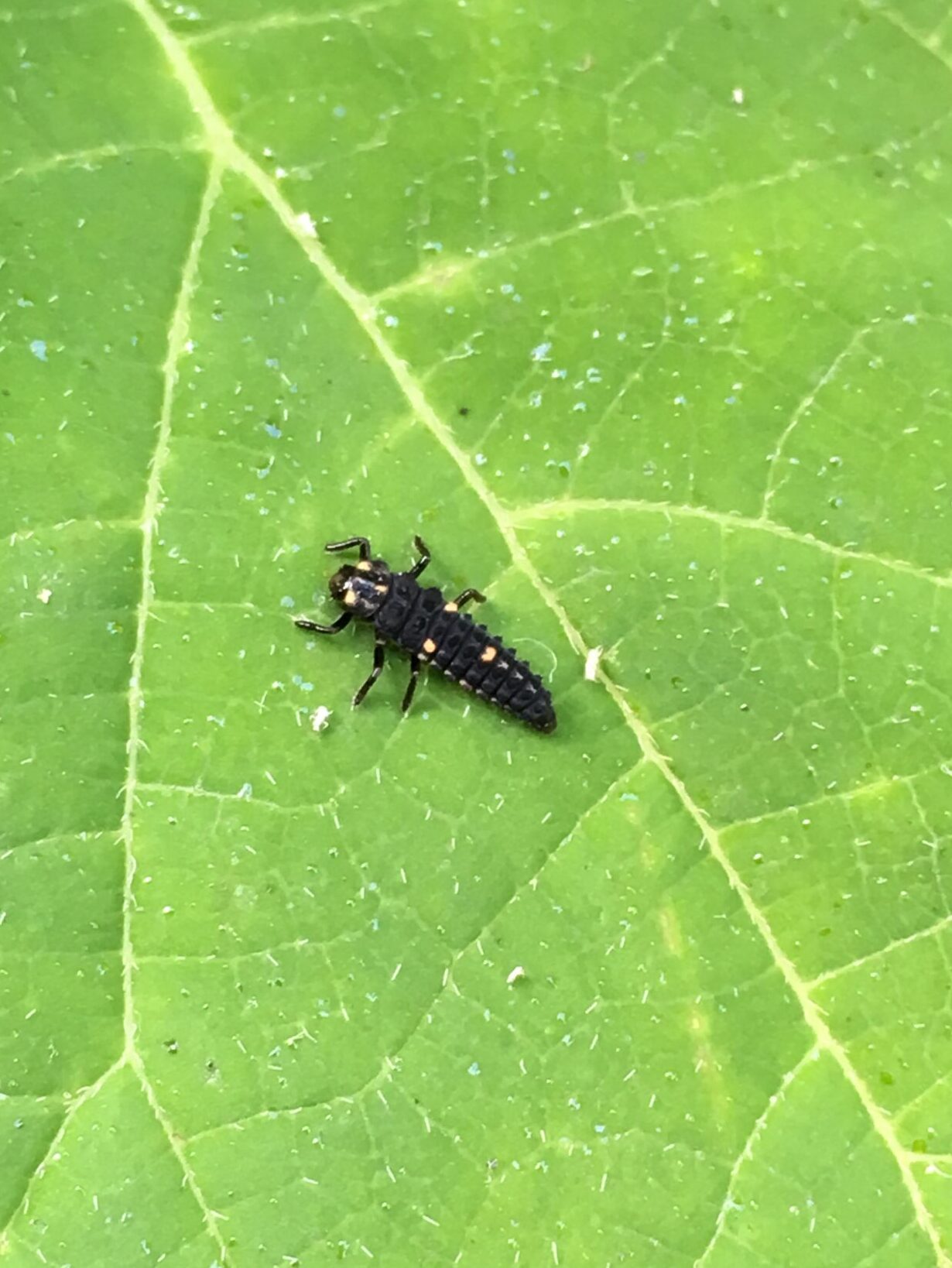
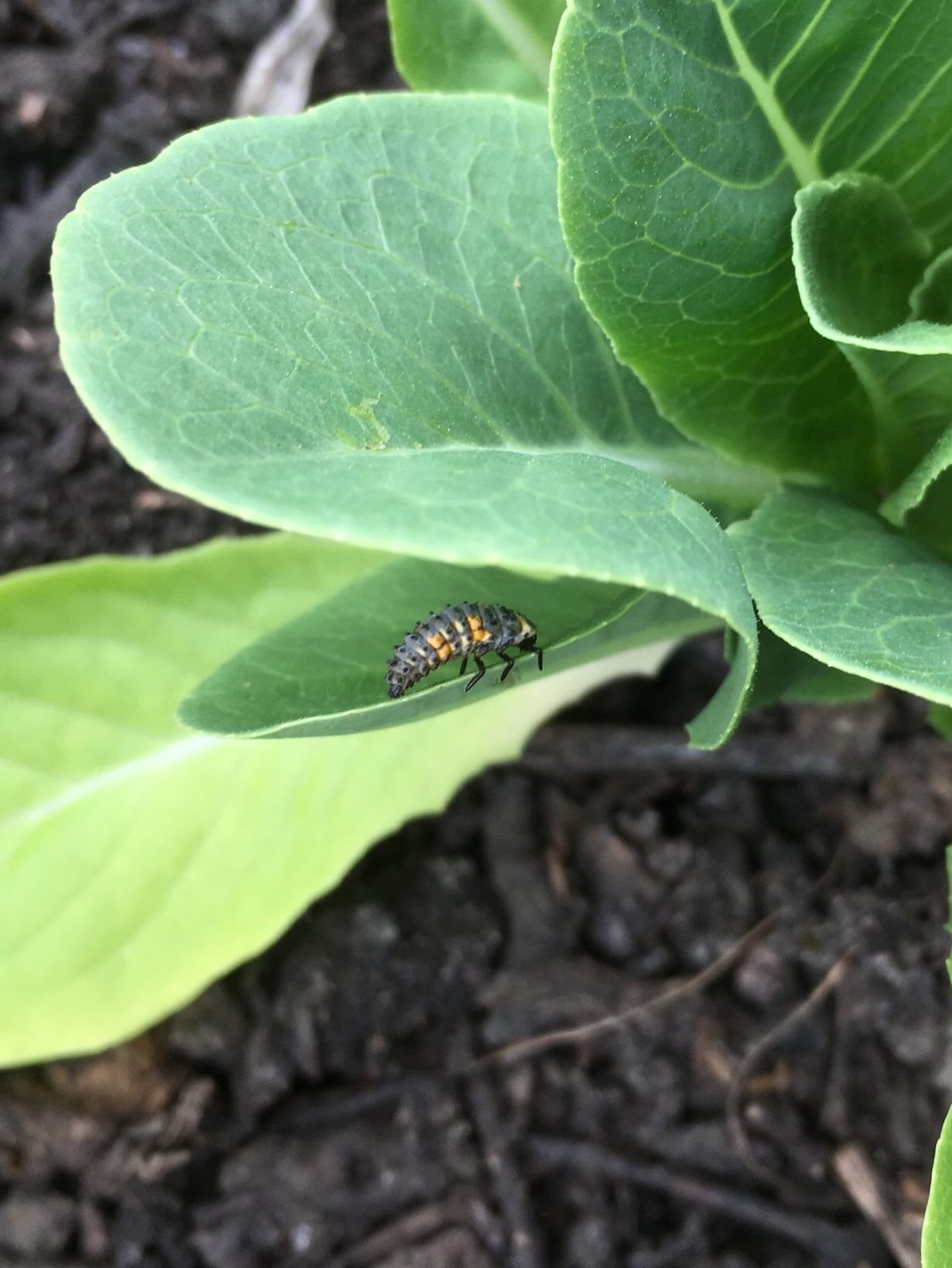
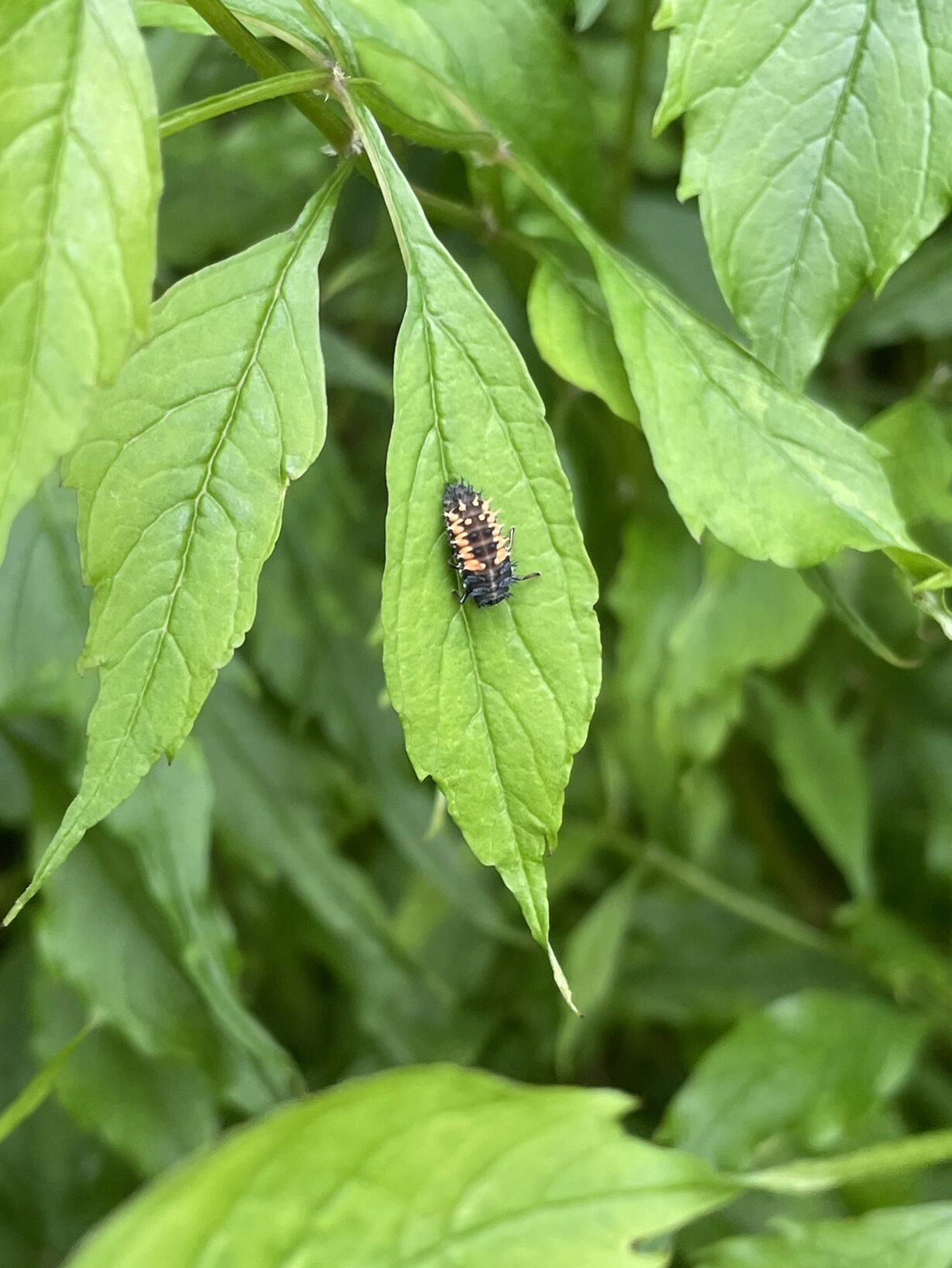
Once big enough, the larvae find a safe place, for example in the middle of a leaf, like the last one in the pictures above, glue themselves in place, and pupate. Pictures of some pupae below. 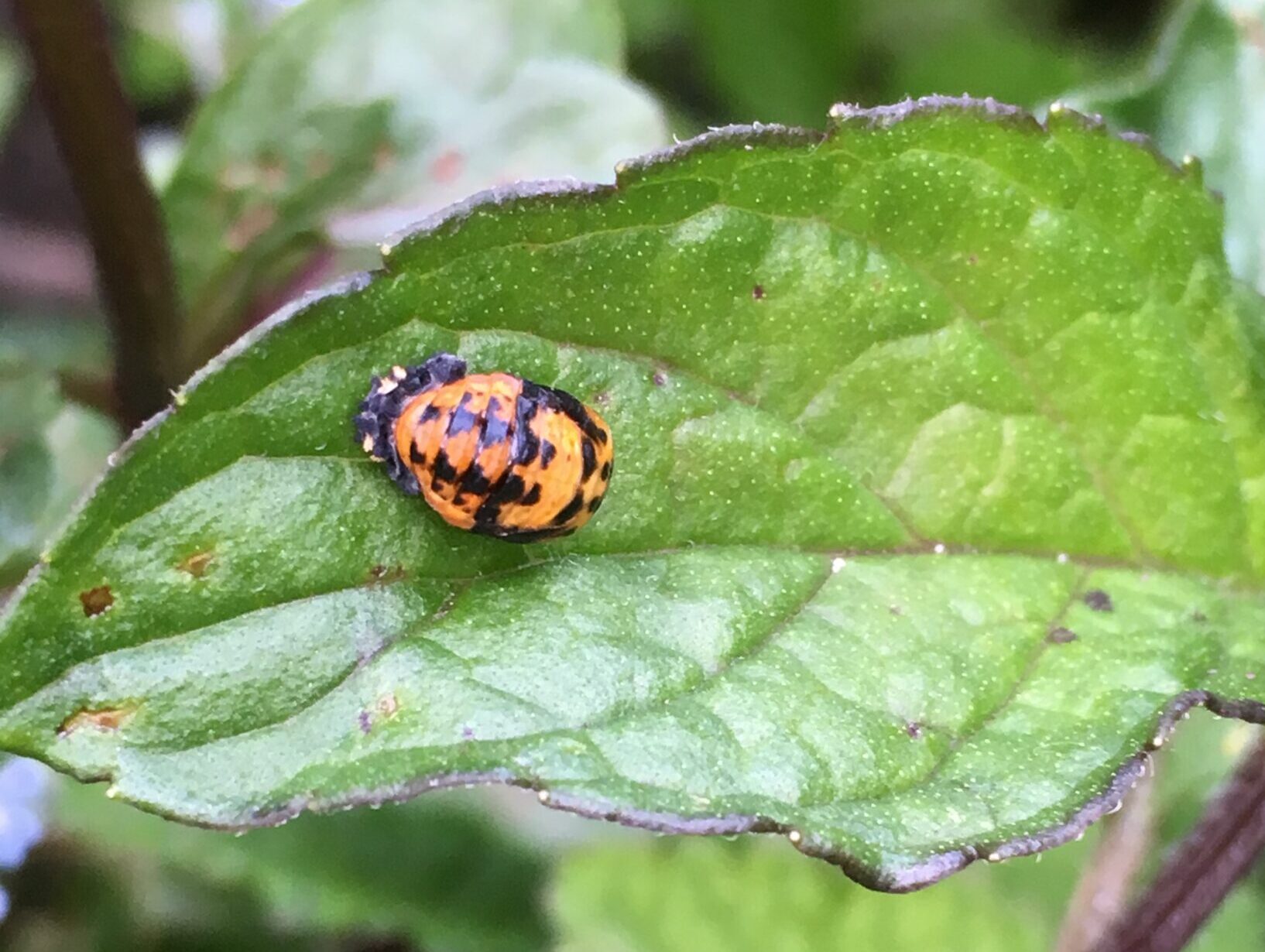
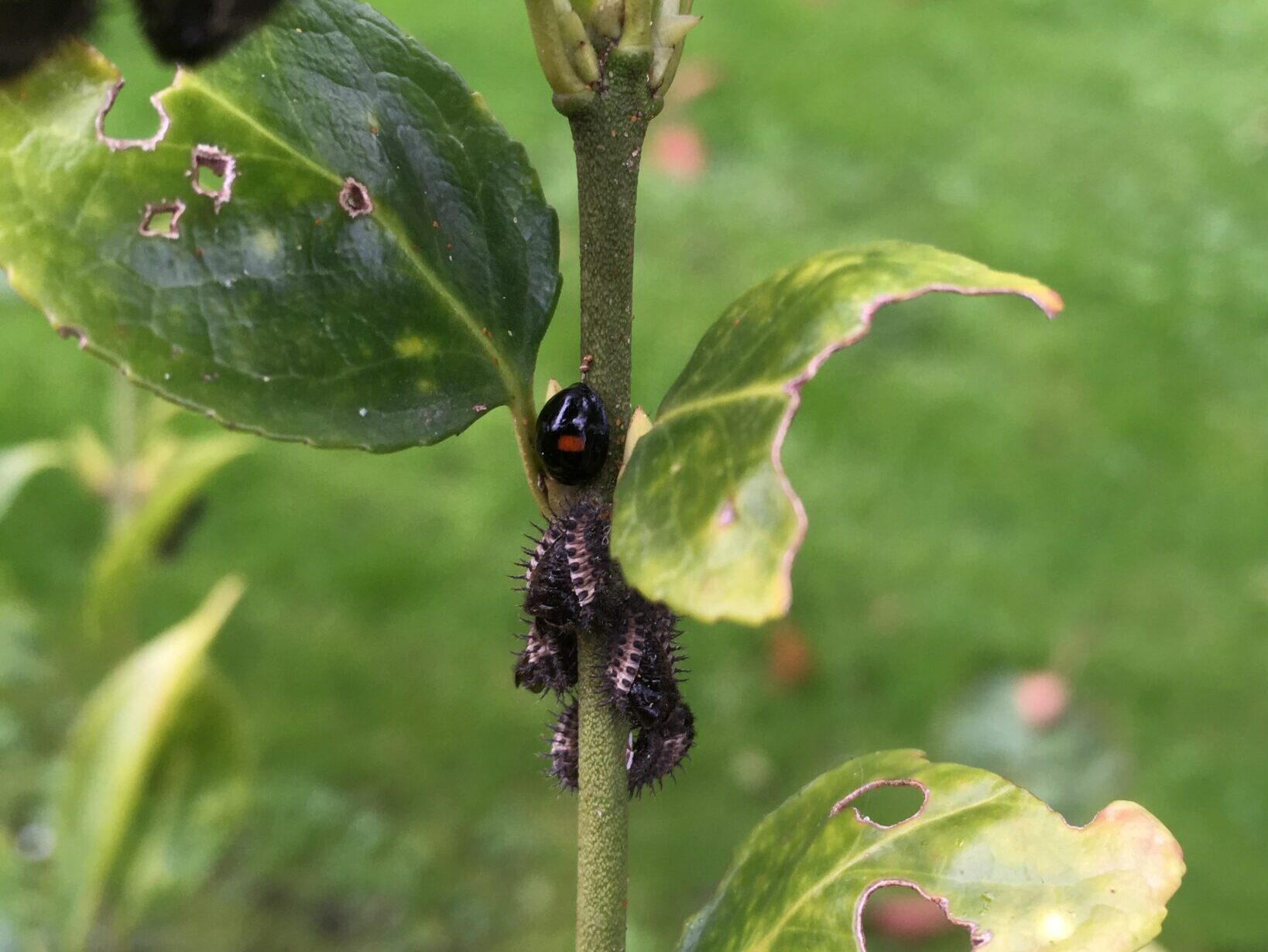
You can read more on the website of the UK Ladybird Survey website, my go-to place for everything ladybird.
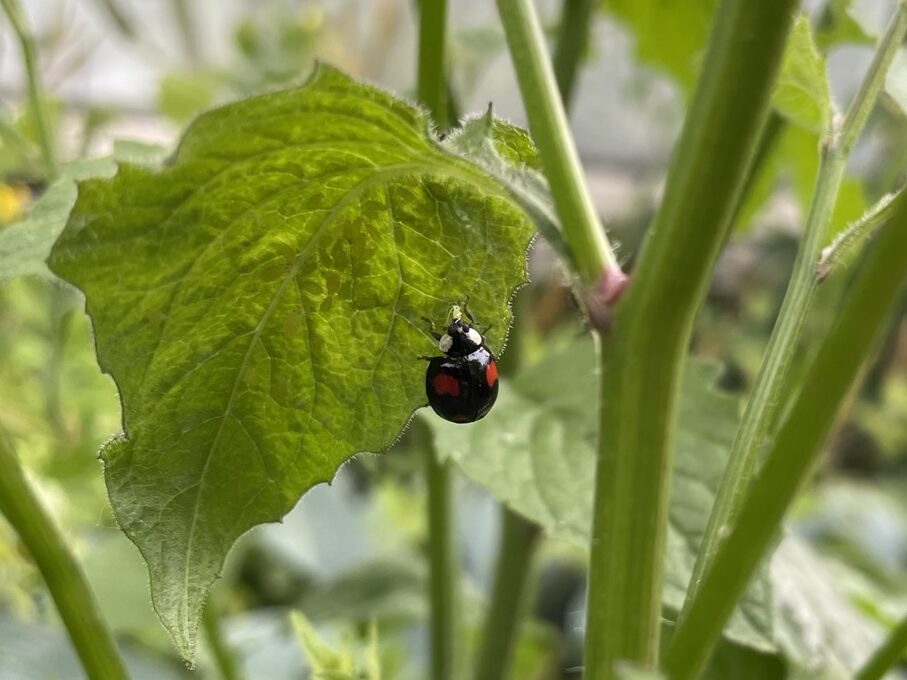
Note that adult ladybirds eat aphids as well: here’s proof!
Hoverflies (Family Syrphidae)
The adults are pollinators, so hoverflies are all useful anyway, yet there are some that double up as predators while growing up (40% of the UK species, according to the RHS), and that cannot but be good news.
The larvae of hoverflies are legless and also known as maggots – hoverflies are flies after all. This is to say, the next time you are tempted to kill a maggot, think twice! Maggots have different feeding strategies, but the ones I know that eat aphids do not wriggle, so definitely more likeable than your idea of a maggot. Some of them look like creatures out of the sea: their bodies are clear and you can see their innards, an easy way to recognise them! Some sport a breathing tube out of their back. Lettuce heads are places where they tend to hang out: more than once have I rescued one from the rinsing water of my salad leaves and put it in the garden. Below some pictures of different species.
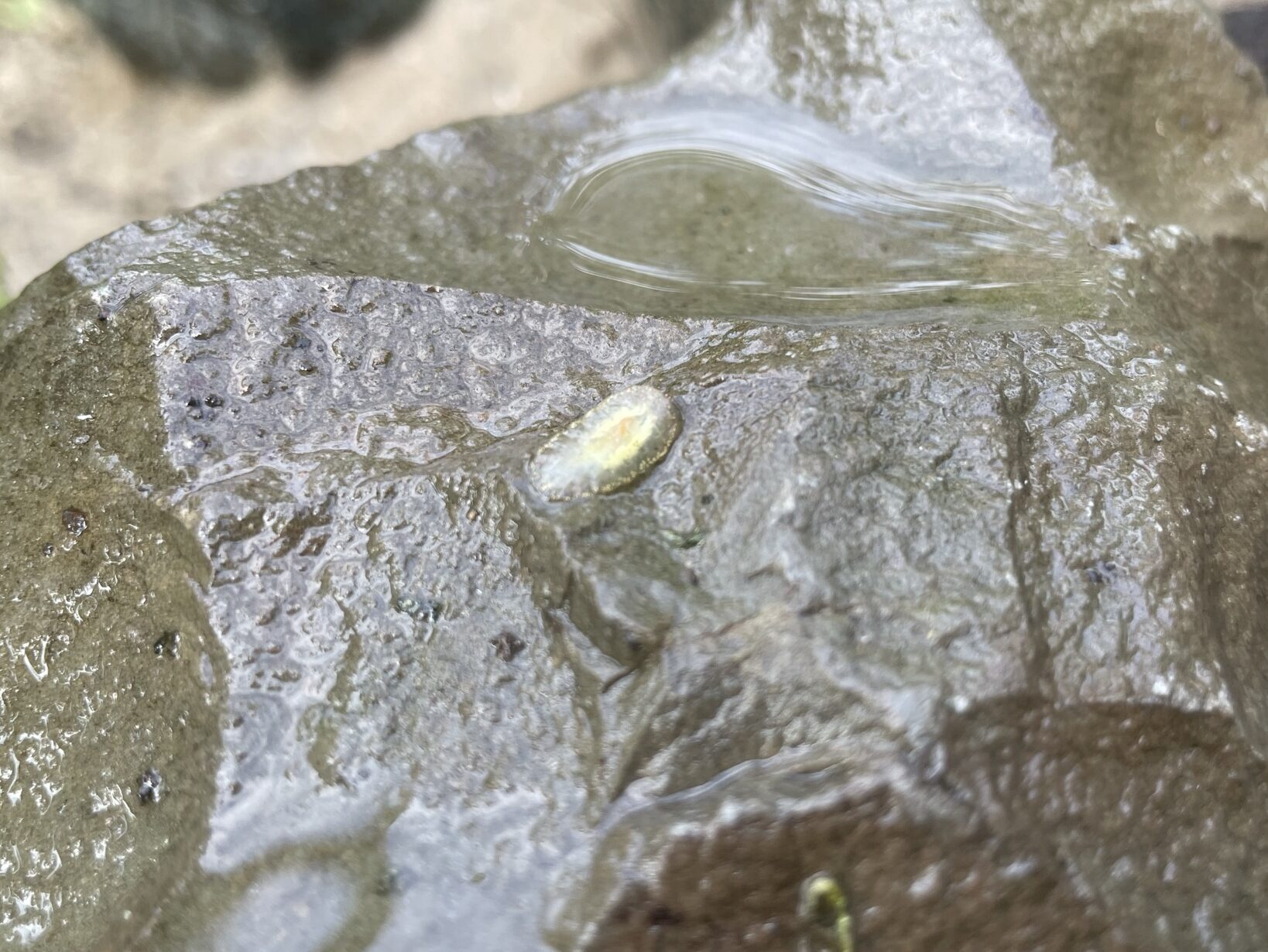
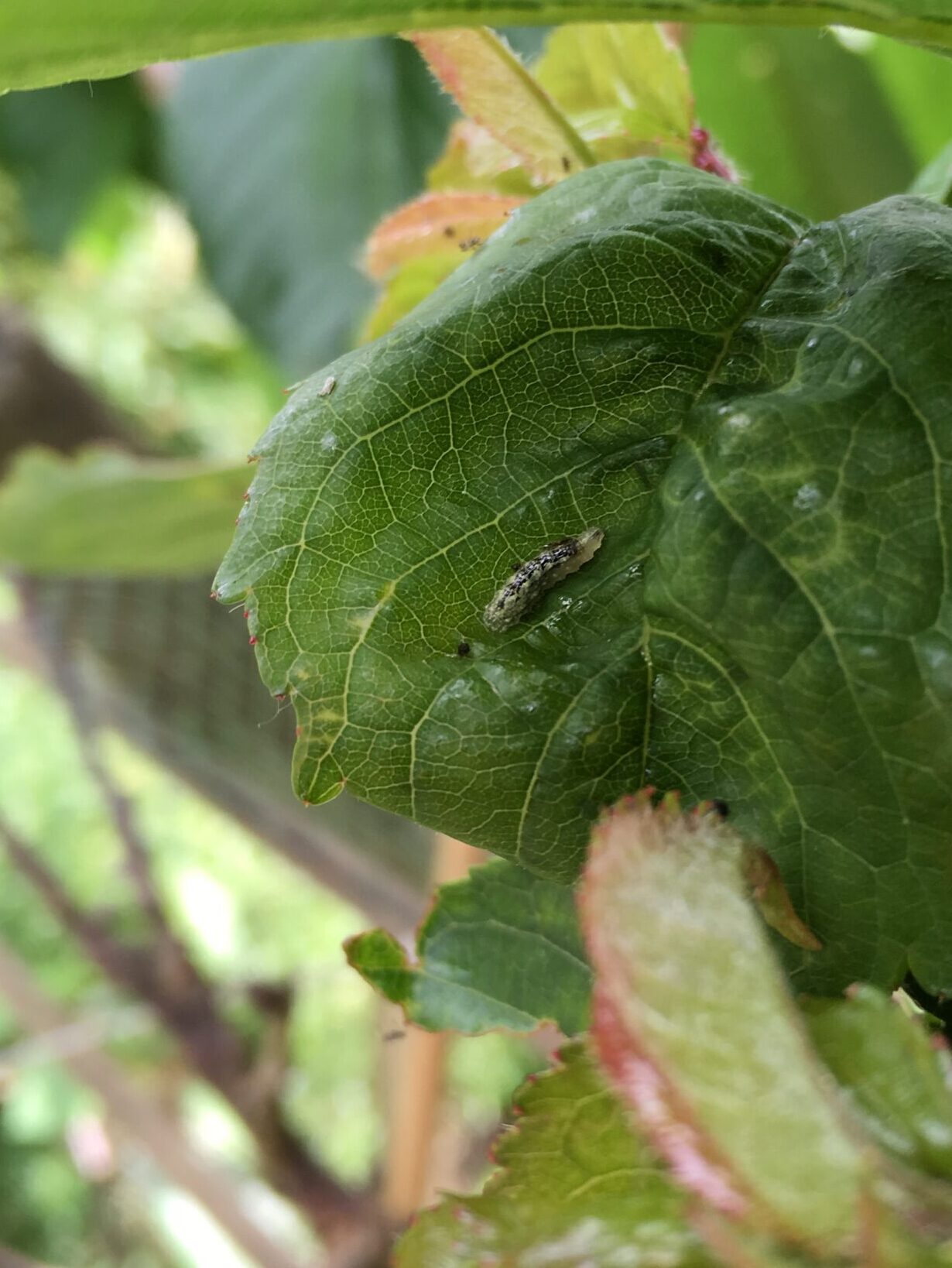
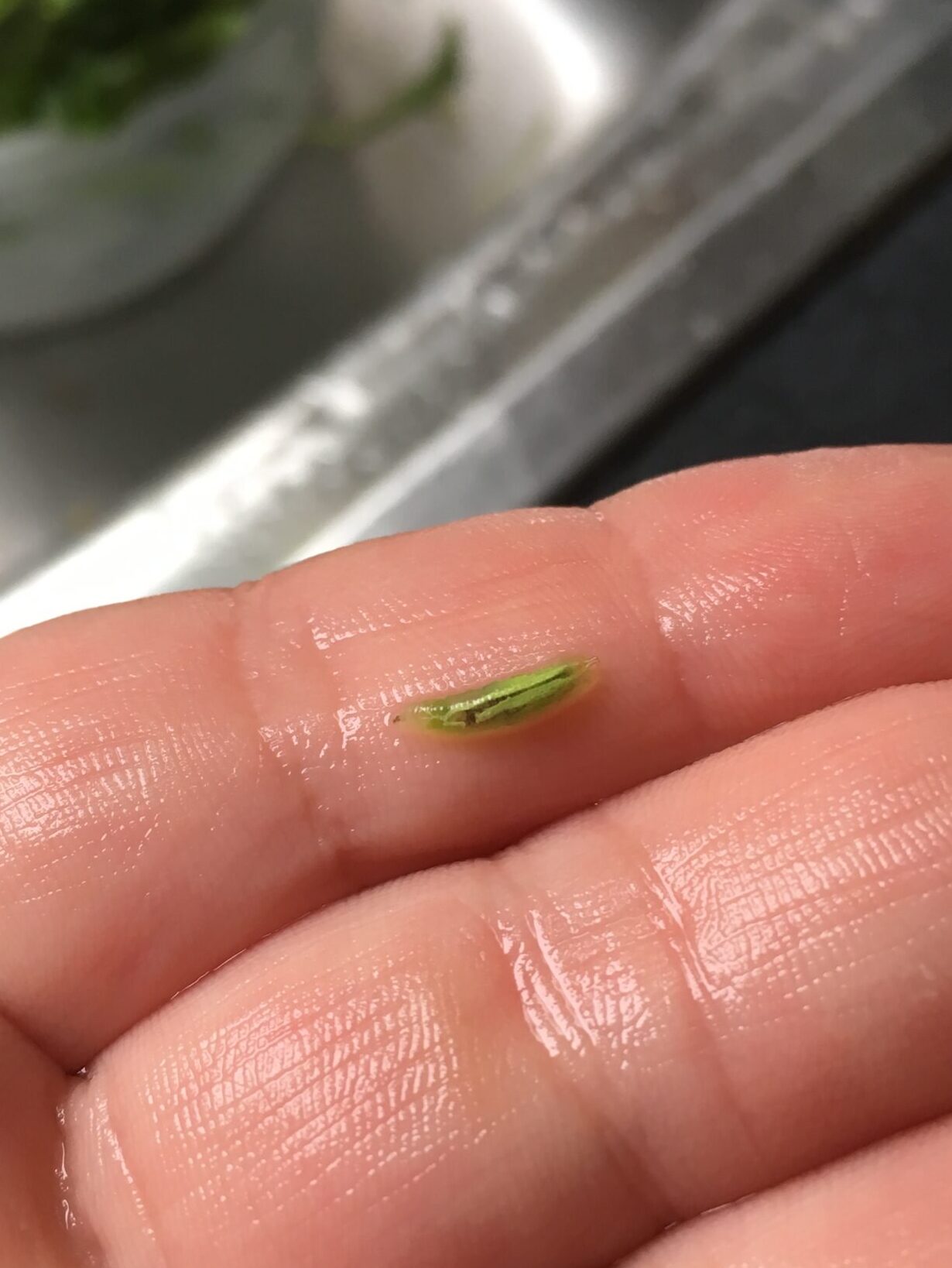
Larvae go through three instars, then pupate. Most of the pupae look like drops, glued by the tip onto some plant (which could well be a lettuce leaf).
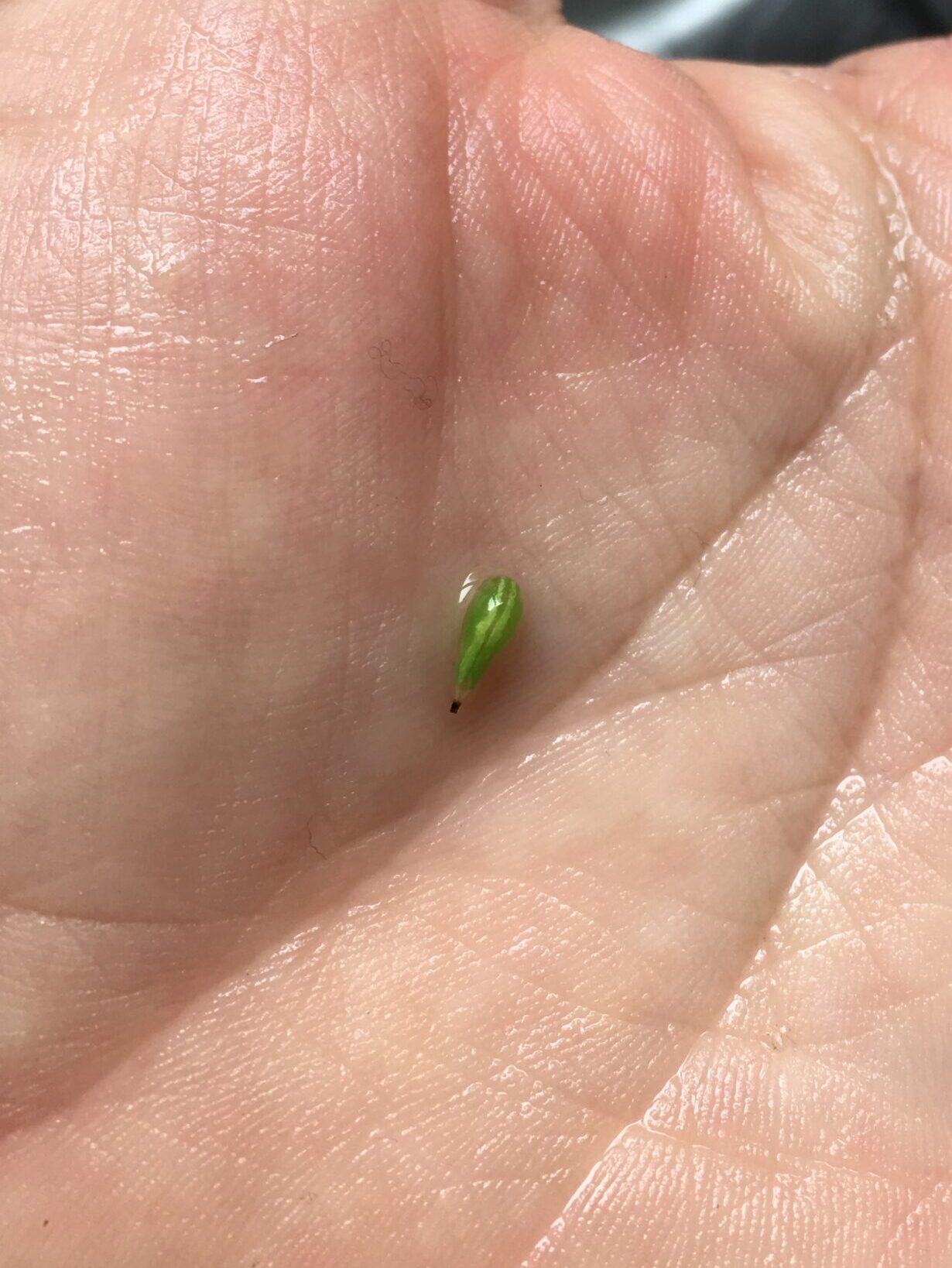
It seems difficult to find more pictures of all stages of the lifecycle from authoritative sources, but I hope you get enough of an idea.
[Update 31/07/26 I found a fabulous resource on hoverflies with a key to hoverfly larvae:
Lacewings (Family Chrysopidae)
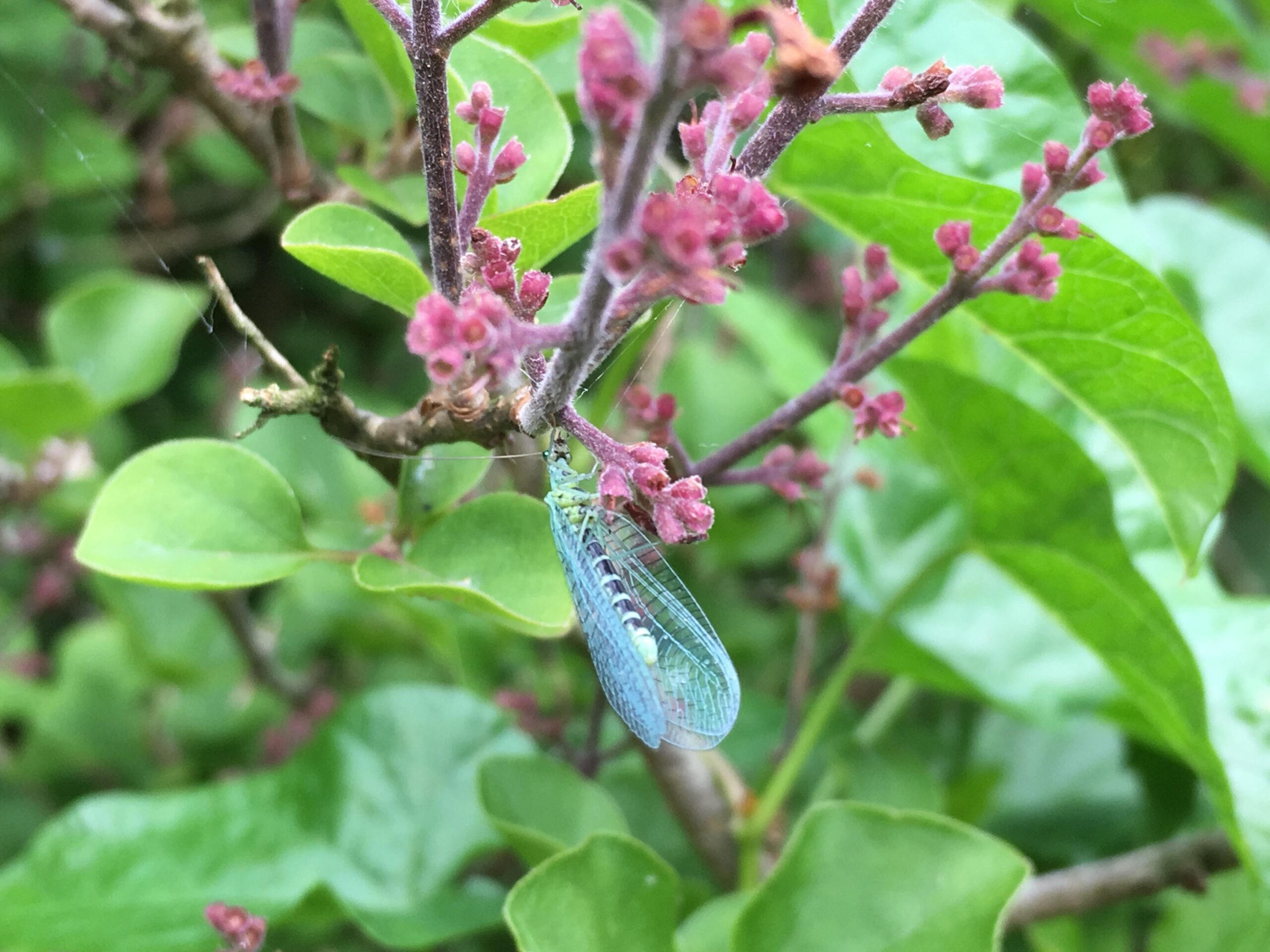
I have just read that, as adults, these bugs have ears* on their forewings, so that is probably why they are so difficult to take pictures of!
(*tympanal organs, that is).
In general, I find these insects quite intriguing, maybe because I am not so familiar with them. Apparently the eggs are laid in groups, each on top of a silky thread attached to a leaf. I would love to see that. A silky coccoon is also where the larva goes to pupate after going through three instars.
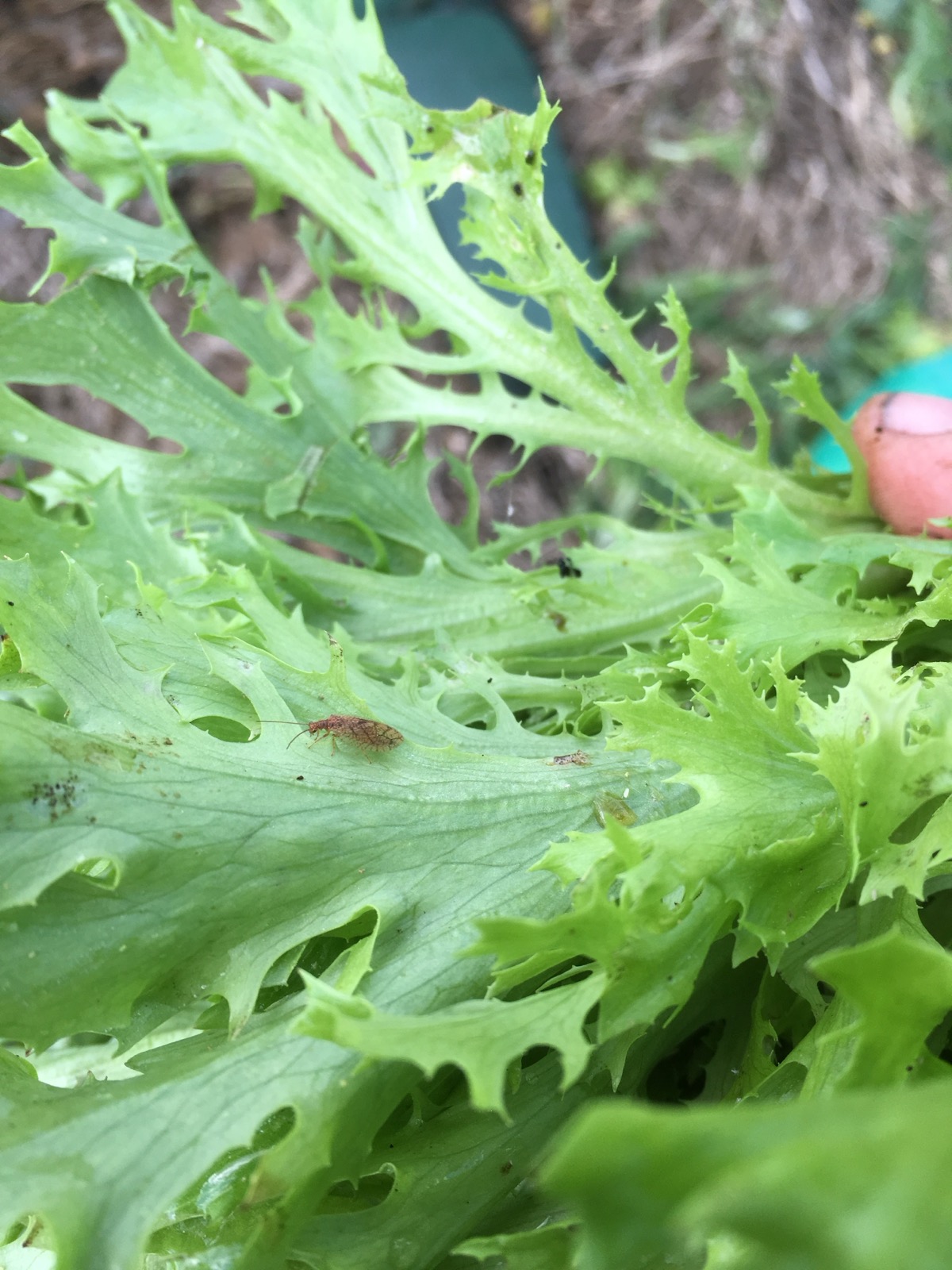
The larvae themselves are the true predators: little brown ‘crocodiles’ with mighty mandibles, which leave you in no doubt what their intentions are. Sometimes they cover themselves in aphid detritus for extra stealth.
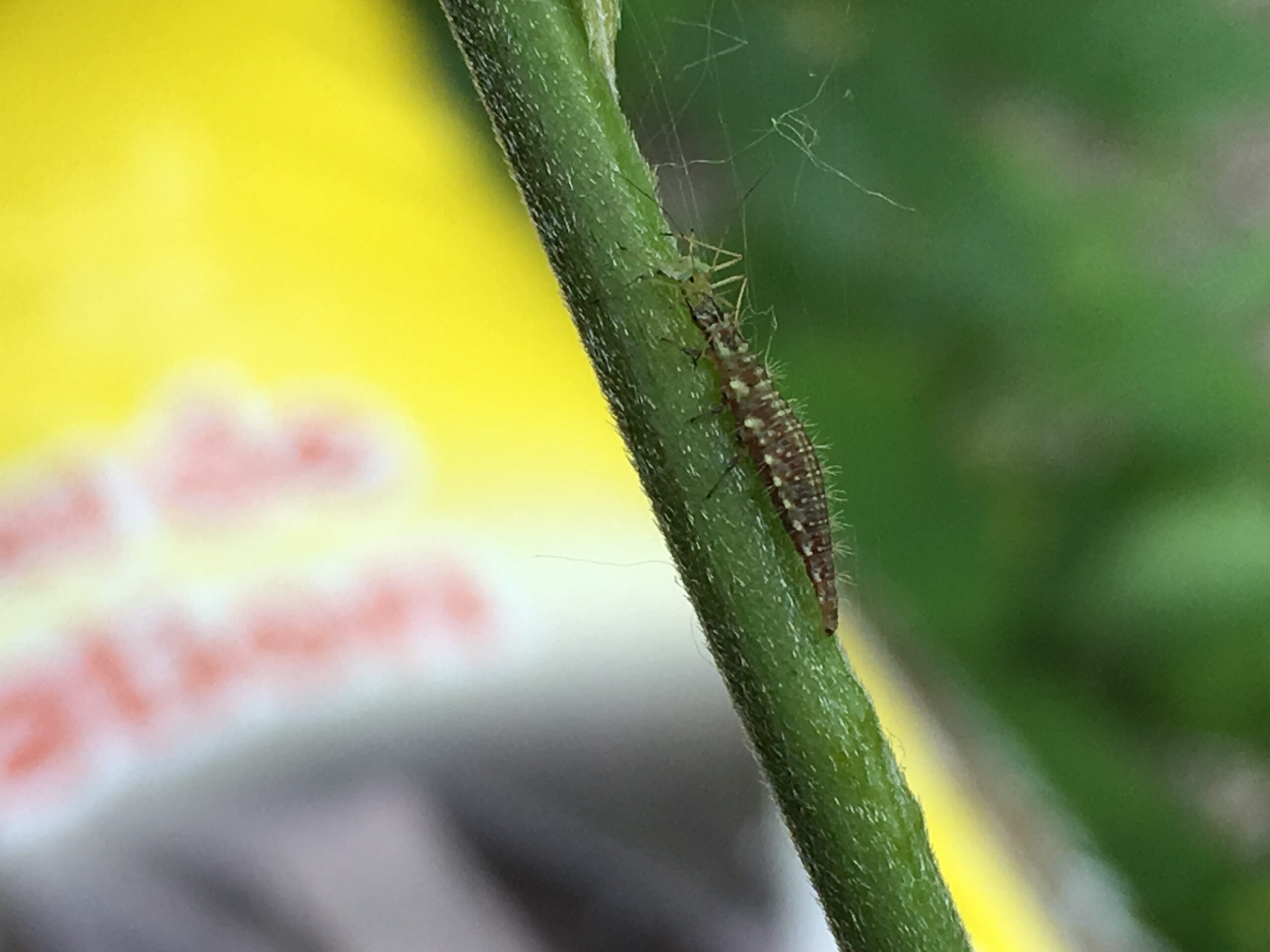
Adults, on the other hand, generally feed on nectar, pollen and honeydew (the irony!), but they do not appear to disdain the odd critter. In case you are not familiar with this more elusive bug, here are a couple imago pictures as well: one brown and one green specimen.
Parasitoid wasps (Aphidius, family Braconidae; Aphelinidae)
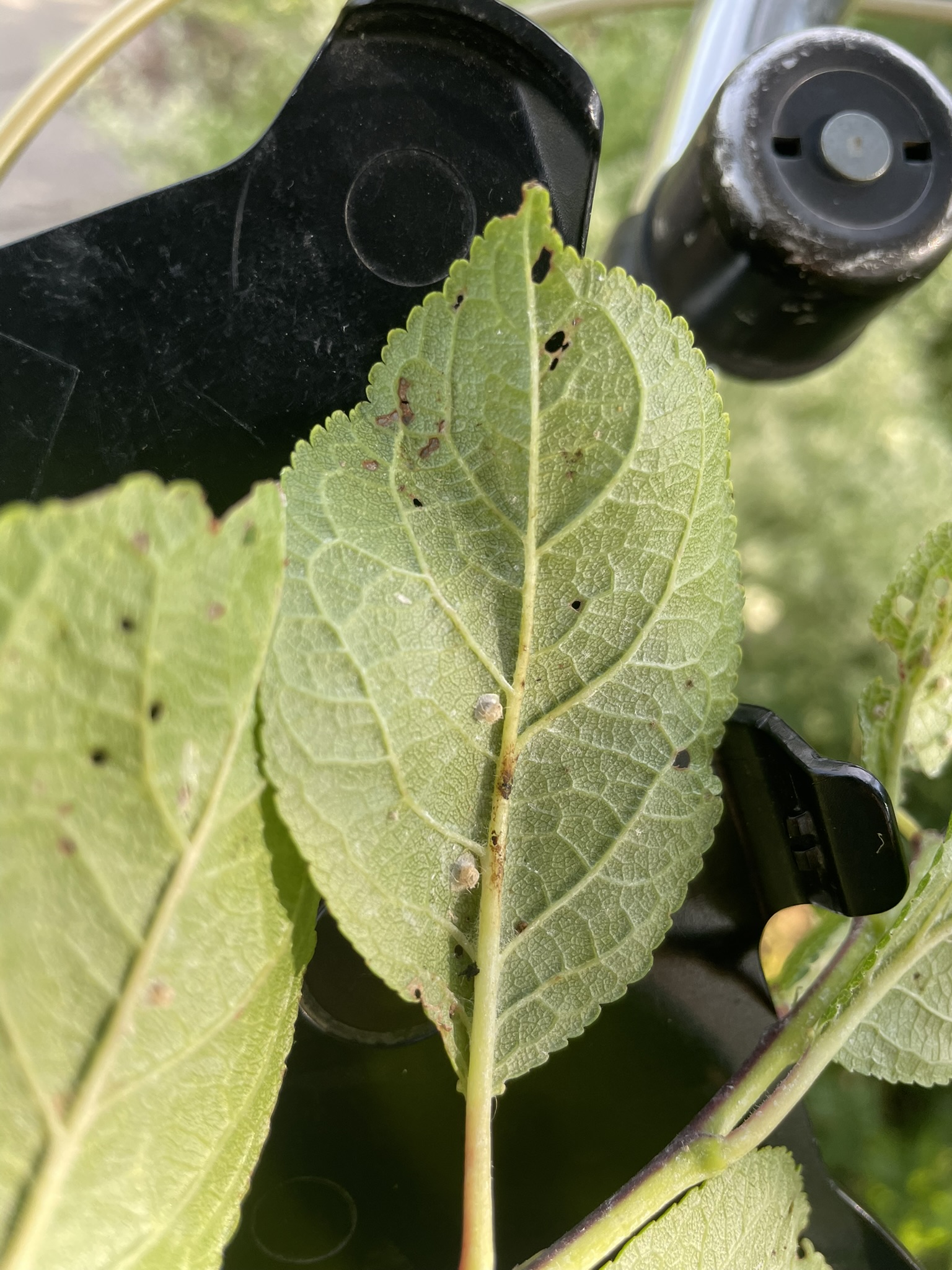
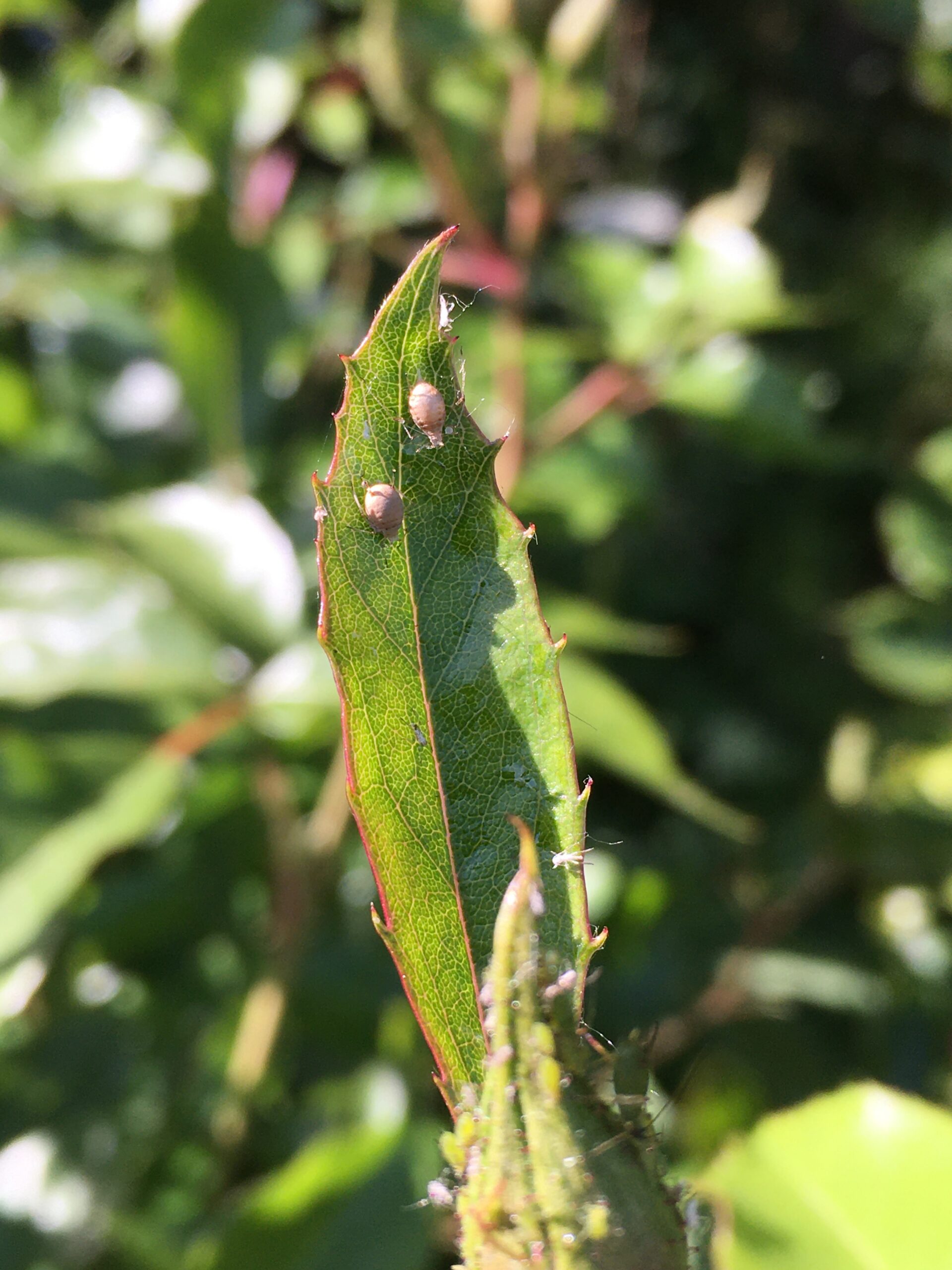
Last but not least the parasitoid wasps, that is: tiny wasps whose larvae develop inside of and feed on aphids, stuck in place and mummified: “crusty, puffy, smooth” mummies, as they are described on the University of California IPM website. I read on the University of Maryland website that wasps in the Aphidius genus make golden mummies, while the Aphelinids cause aphids to become dark, so I seem to have mainly the first in my garden.
The Aphidius babies live all their lives inside the mummified aphids; some pupate inside, some underneath it, which is I think what migh cause that webbing under the mummies that I have photographed. It is not clear to me if there are species in either family whose larvae live outside the mummies, but in any case the presence of a mummy is indication that there’s predators around: hurray!
[Update 31/07/26 see later post A mini ecosystem around my Echinops’ buds for another predator I recently discovered predatory midge, Aphidoletes aphidimyza]
 M.Paola, that’s me
