When I first came to the Netherlands I was shocked by the really extensive moth webing on several plants, which made them look as sick and neglected: not something I was very familiar with, at least in cultivated gardens.
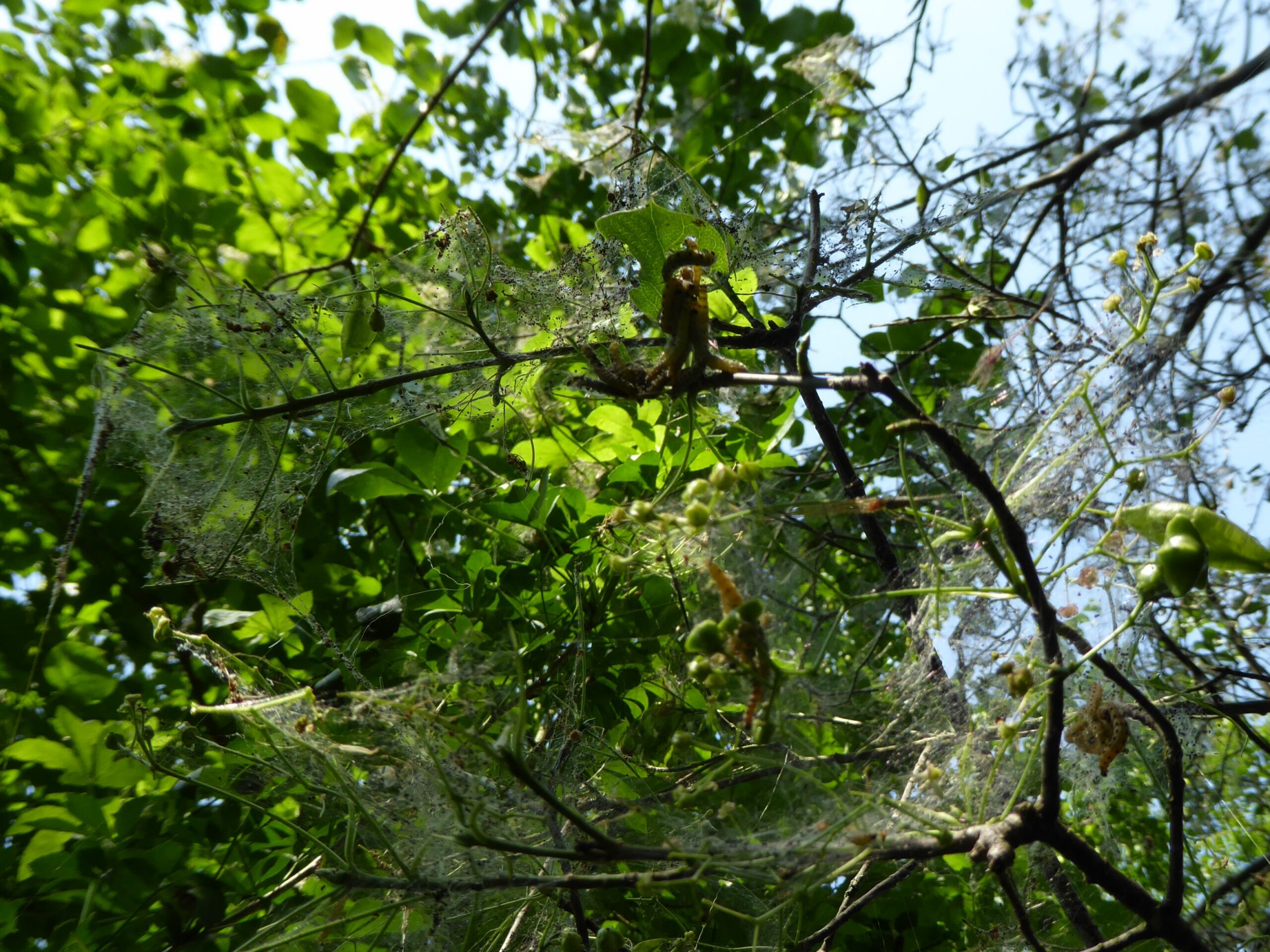
The spindle Ermine moth’s caterpillar also have a habit of hanging from threads in the webs (see pic above): I distinctly remember that after going through the spindle area of the garden I felt like I should decontaminate, lest I brought some unwanted visitor back with me to the UK. However, both the botanic gardens I visited, and the allotment manager, were very reassuring: the Ermine moths whose caterpillar grow up in the webbing do not generally cause much damage to plants, for how ugly their dwellings might be.
I have since become much more relaxed myself, and recently noticed that some horticulturists in the UK were concerned about Ermin moths on apples, so I want to reassure you: I have now witnessed this process for 7 years, sometimes quite on a large scale, and my apple trees have sustained no permanent damage. Importantly, while some defoliation occurs, the fruit is anything but damaged. It is not always the same trees that get affected on my plot, so I am under the impression that trees that are already stressed may become easier targets – that is in truth pretty much the case with all pests and diseases.
This year the most affected is my ‘Groninger Kroon’ apple, which is in its off-year of biennial bearing. That means that last year this tree was laden with apples, in a year that in itself seemed to be a sort of mast year* for fruit trees. 2025 was a very stressful year for plants because of drought and heat, following from a year with an extremely wet spring: plants will react to stress producing more fruit so that the species can survive if the individual succumbs; producing more fruit of course makes a dent in the reserve resources of the plant.
Back to the Ermine moths. If you have the stomach, you can just grab the tip of a branch and pull away the web with all the caterpillars in it: I used to feed them to the fish in the ditch. However, you don’t really need to do anything, besides encouraging wildlife around your tree. Some birds will eat them.
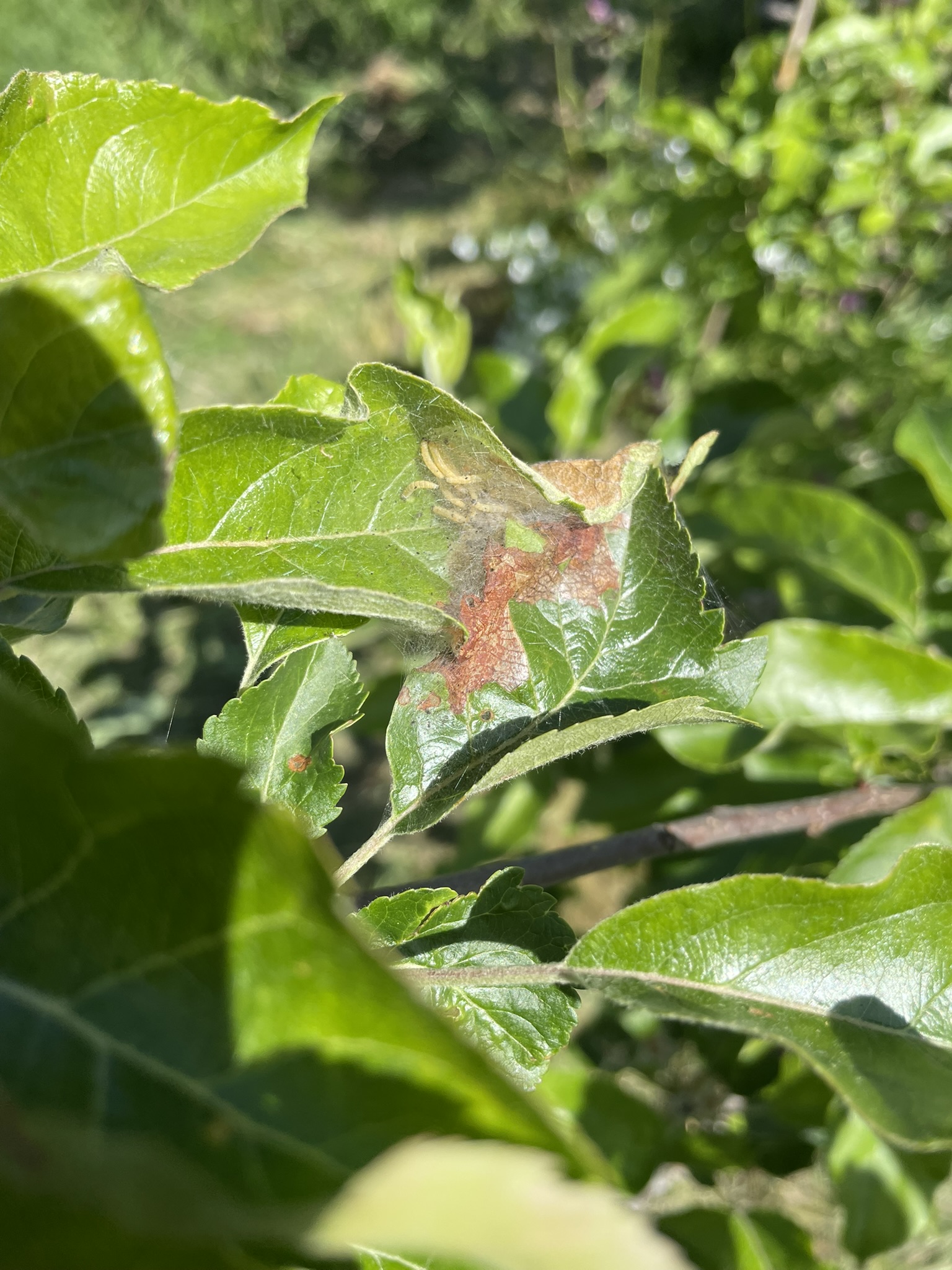
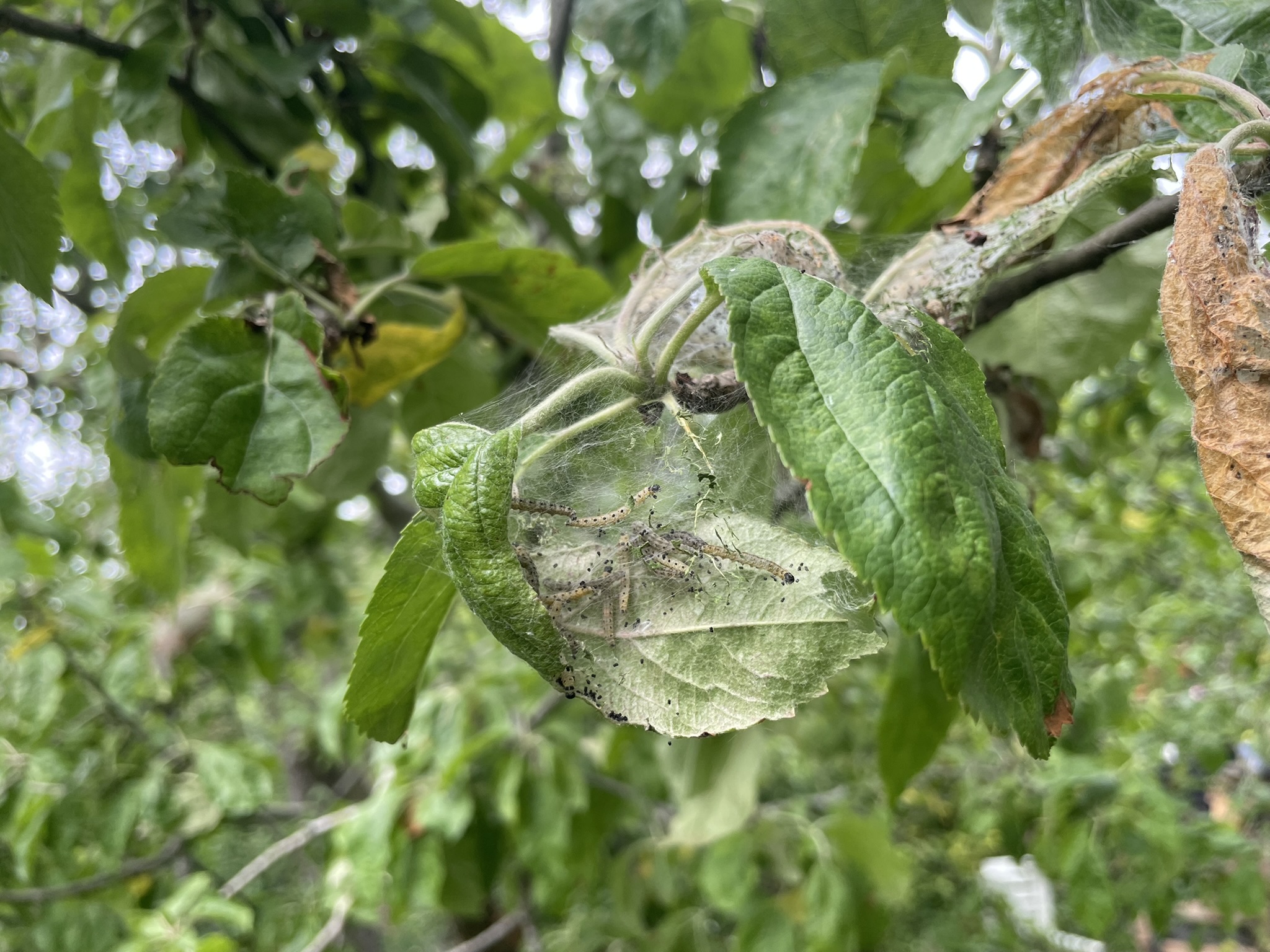
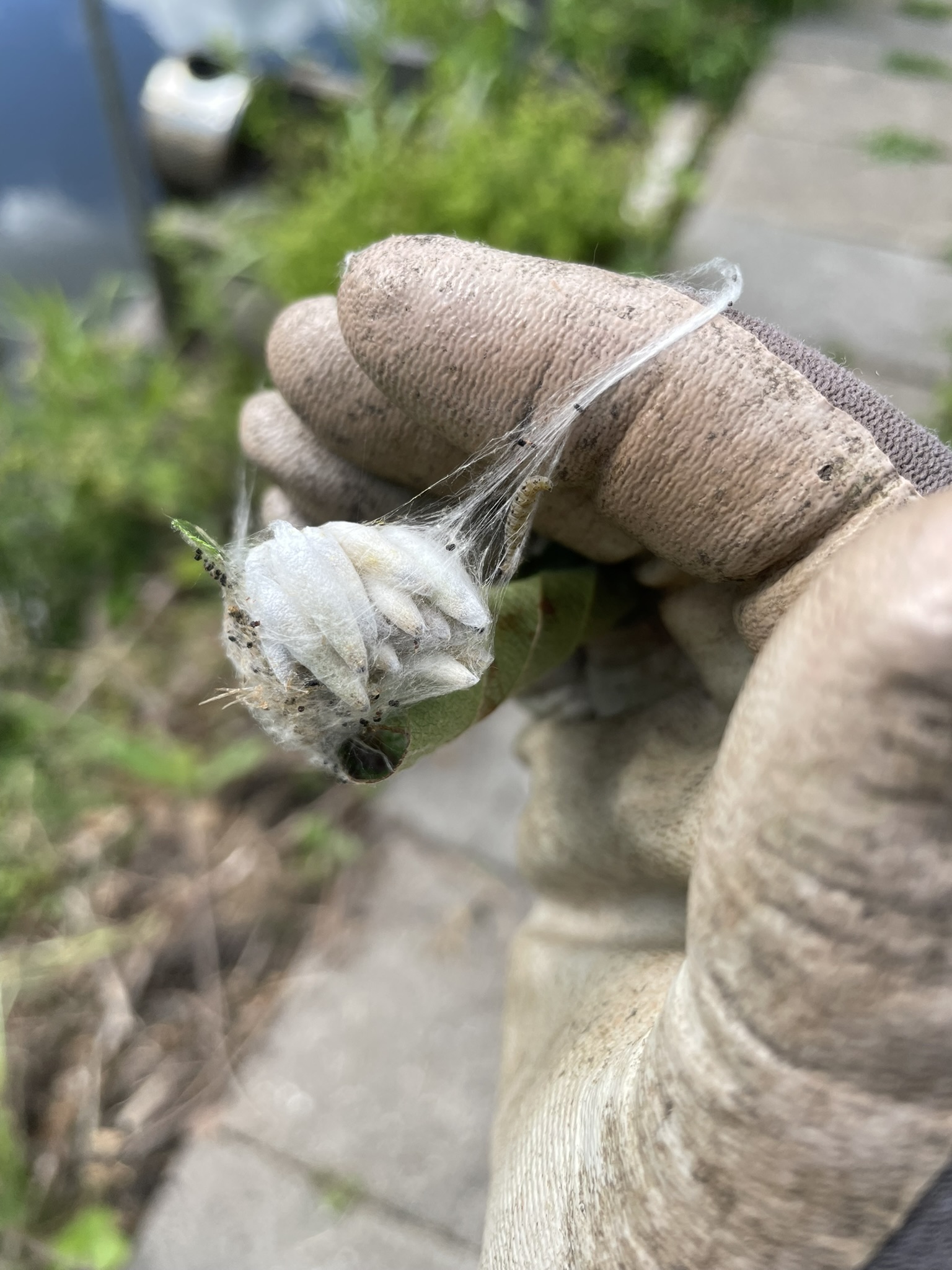
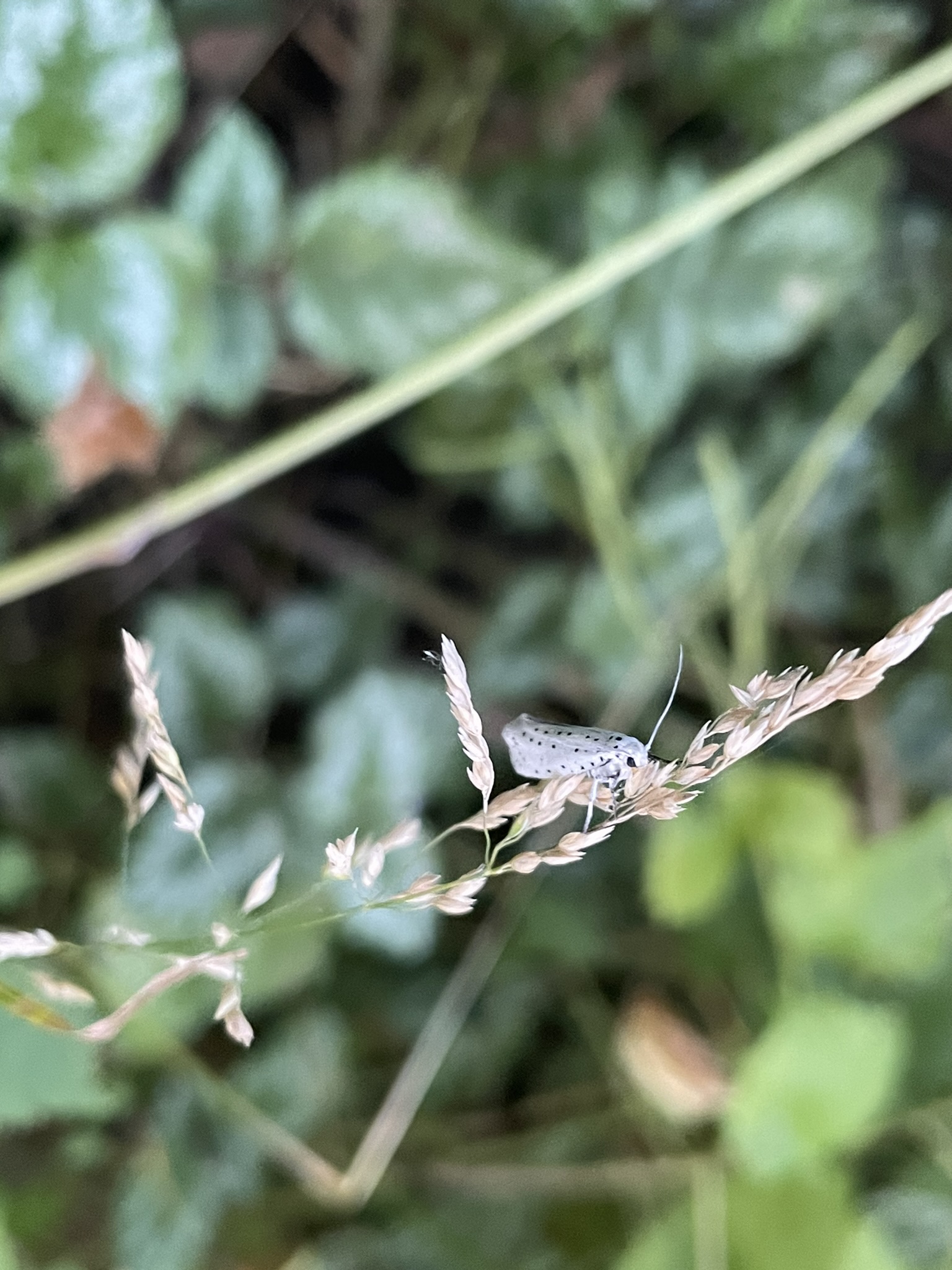
If you leave them alone, they will just go about their life: appear in May, at first mining fresh leaves around innocuous-looking webs. They will keep growing, going through five instars (stages of growth, in the pictures above they look yellow at the beginning, then green with dots), and with that the webs will become larger and filled with frass** and the tree mayl start looking like the stage for a Halloween play. The caterpillars will then pupate inside the webs and finally turn into little white moths with black dots: they derive their name from their livery, resembling a stoat’s winter coat. At that point, their presence becomes unobtrusive again, while they fly around, mate, and lay their eggs on the bark of trees. I have never noticed those, but there is a picture on Washington State’s website. The young larvae that emerge from the eggs just overwinter under shelter of the egg batch, before coming out to feed again next year.
* mast year a year when group of trees seem all to produce more fruit in unison. It occurs mainly in a forest setting, and you can read a fascinating hypothesis of how it works on the Woodcock Nature Centre website.
** frass the collective name for insect droppings, often collecting in or around the holes they dig into fruit, but in this case inside the webs
 M.Paola, that’s me
