“Herbaria are collections of dried preserved specimens that document the identity of plants and fungi. They represent reference collections with many and varied functions including identification, research and education”.
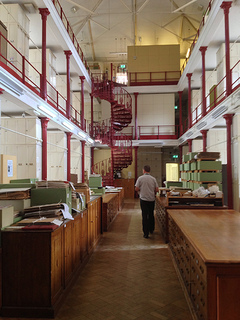
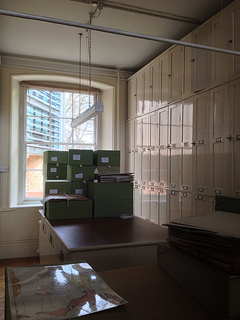 When you take into consideration that the cupboards (here and in other more modern parts of the building, as this was filled to capacity shortly after being created) contain 7.5 million specimens, some 350,000 of which are type specimens, that is the “official” description of how a plants looks like for reference and identification, then you really feel how extraordinary this place is.
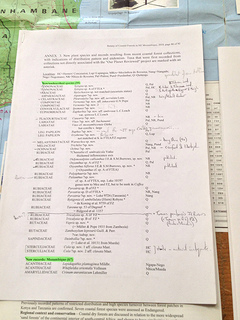
Then we were shown some specimens he has dried but not fully identified yet, as they are from his most recent trip to Angola. As expeditions are rather expensive, one has to concentrate on getting a representative selection of the local flora, collecting specimens and avoiding they get damaged (i.e. mould). All the rest can be done once you are back at the Herbarium, where you can consult previous collections to help you identify your specimens (redundant collections are welcome because they document the variety within and/or distribution of species) or any species new to science.
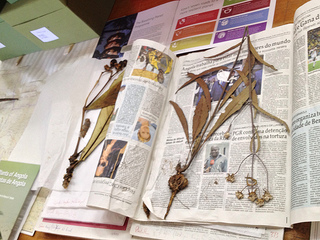 |
| One of David’s most recent specimens |
David also showed us an identified specimen from the expedition to Mozambique, and one of the reference specimens they consulted, from the collections, when identifying plants; it’s by 19th century Scottish missionary and explorer David Livingstone (more about his correspondence with Kew).
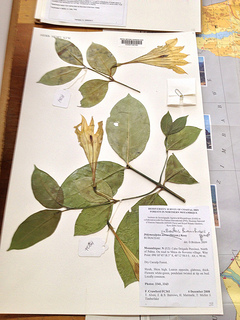 |
| Contemporary specimen |
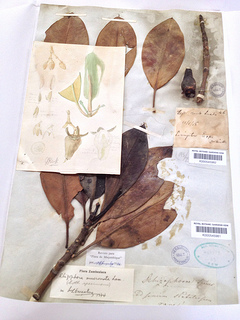 |
| 19th century specimen |
About Me
 M.Paola, that’s me
I got my first allotment in the UK in 2007 and started growing my own food. Learning as I went along was not enough, so I studied horticulture. Faced with the horticultural warfare, I became a conscientious objector: I use no chemicals and support organic principles and regulations.
Brexit gave me a new life in the Netherlands, three new plots by a nature reserve and an MSc in sustainable food systems.
I write in my personal capacity and, as a language perfectionist and a non native speaker, I keep reviewing my entries’ text for clarity.
Some Rights Reserved

This work is licenced under a Creative Commons Licence.