Another plant species that is commonly known to suffer from red, curled up leaves in the spring is peach.
The curling up is caused by a fungus, Taphrina deformans. The fungus, which favours cool and wet weather, causes leaves to pucker; the blisters are often red and rather showy, just before the fungus starts producing spores, which gives the affected leaves a sickly yellowish look. Although a handful of affected leaves can be removed and do not cause plenty of damage, if left untreated the fungus comes back year after year, having survived on the plant surface and on plant debris, and weakens the plant considerably.
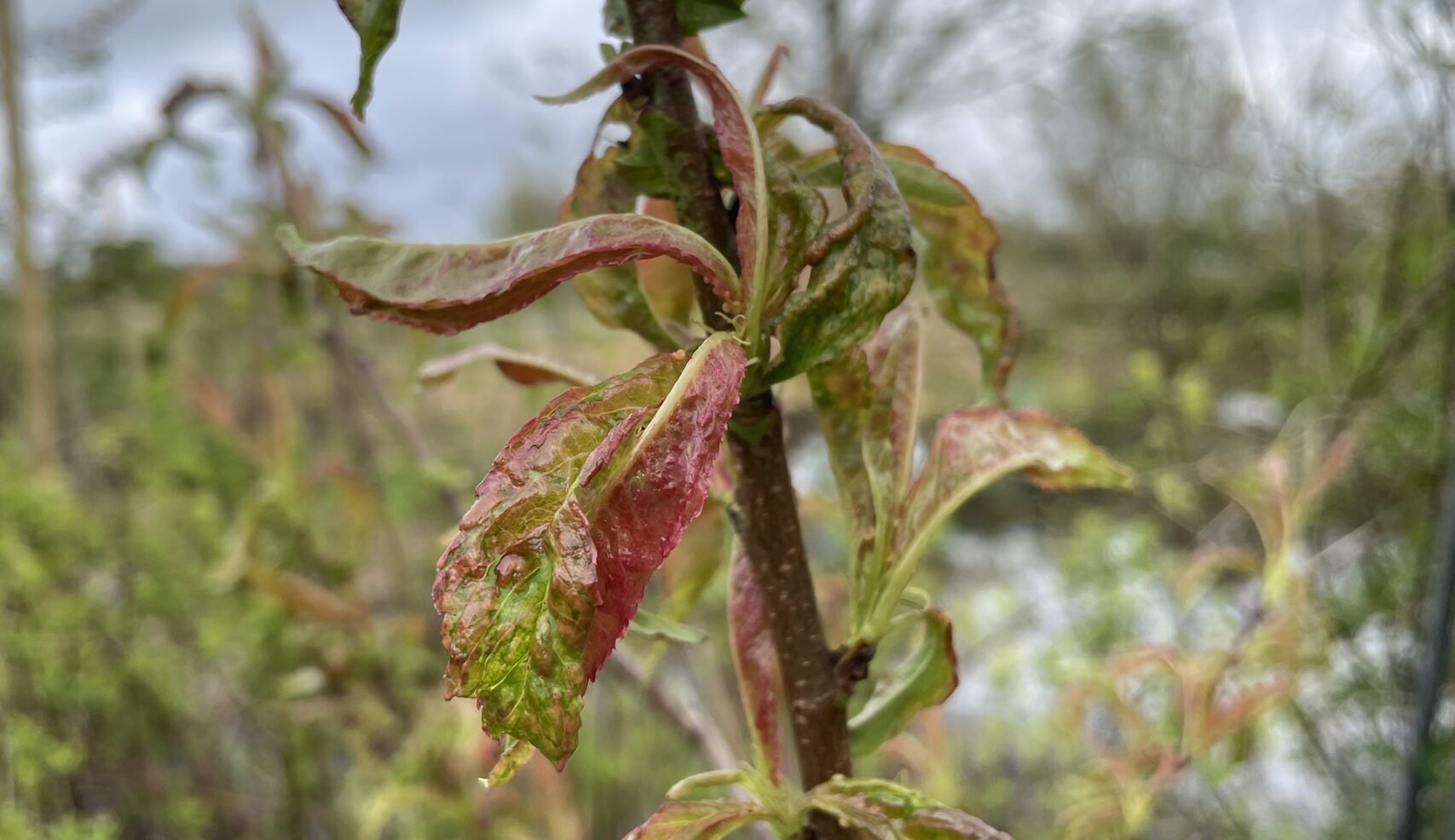
This is the reason why peaches and nectarines tend to be grown under glass, or – like they did at RHS Wisley – get covered from November to May. I did write about helping with putting up lean-to shelters to protect the trees a few years ago.
If planting outdoors, one would ideally choose a resistant cultivar.
I made an experiment growing peaches and nectarines from the stones of some fruits I liked, as apricots and peaches come true to seed, or at least very close.
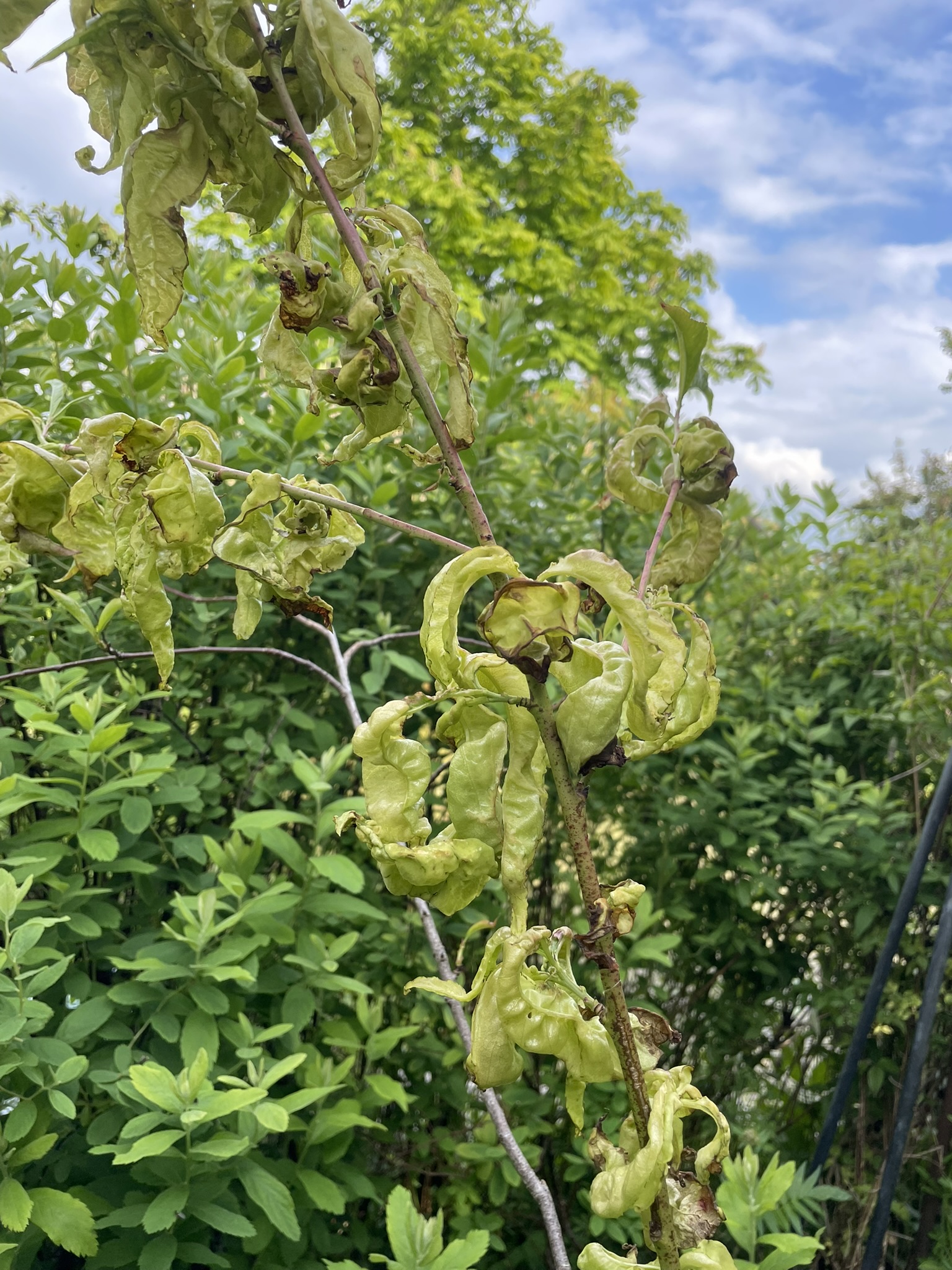
The Saturn peach I grew is very susceptible to leaf curl. The first couple of years I treated the blisters with an infusion of garlic with a few drops of added tee tree oil: this desiccates the blisters and the leaves grow on healthily, provided the weather stays dry enough. It is however only feasible for minor infections as you don’t want an antibacterial/fungicide sprayed extensively, for how ‘natural’ it might be. I had hoped the tree might grew out of it but it didn’t, and despite a handful of flowers, it has never fruited.
Having grown two nectarine plants from seed that seem immune to the fungus, I have now decided I will get rid of the peach as it’s not worth it.
You can read more on T. deformans on the RHS, Missouri Botanical garden (which helpfully mentions that occasionally it may be aphids that cause leaves to pucker: look under the leaves!) and UC IPM websites (offering a detailed lifecycle).
 M.Paola, that’s me
