aJuly is the time of endless bounty of soft fruits. This year it was raspberry first, followed by gooseberry and redcurrant is just coming now.
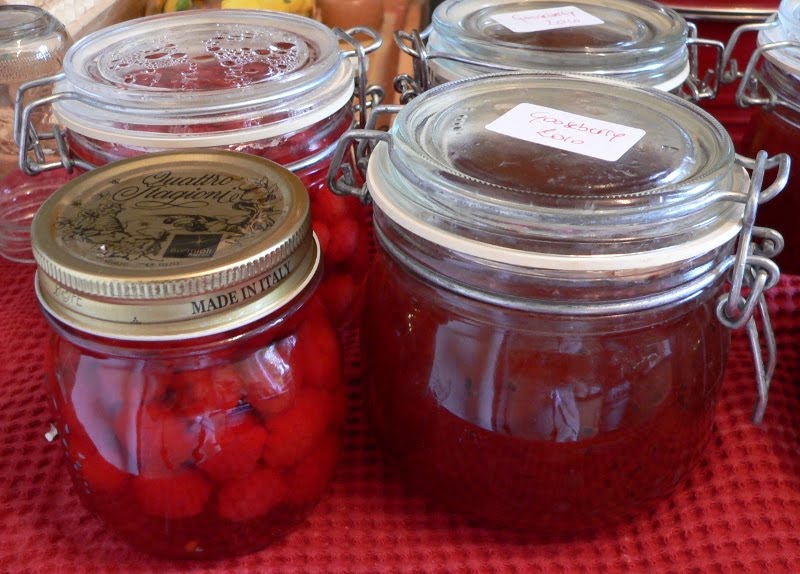
Pound after pound of raspberry for dessert were getting a bit too much, so I have frozen some for later on (trick to keep them whole I discovered is to dry them thoroughly), but I have just a small freezer. Last night I tried a River Cottage recipe for bottling them with gin and syrup. It was very easy, quite rewarding.
It takes:
- 1kg raspberries, firm just ripe
- 150gr sugar
- 750ml water
- 100-150 ml gin, brandy or raspberry liqueur
Make the syrup by slowly bringing to the boil water and sugar, stirring to dissolve it. Keep warm.
Pack a sterilised jar full of raspberries, pour the alcohol and then fill with the syrup.
Put the jars in simmering pan at body temperature and bring to 88C simmering point over 20 mins, leaving to simmer for 2 mins
Will have to check that the lid is airtight, which is done when cool in 24 hours.
You know, I am really at the basics with sterilising jars and checking bottletops and airtight lids: still learning the difference between “Le Parfait” (with metal buckle, particularly difficult for me but the most common here in the UK it seems) and “Quattro Stagioni” (with screw lid) handling practice, and I am so scared of poisoning someone by mistake! I have so many questions, for example: is condensation ok? It could lead to moulds, but how do I prevent it? And if I close the lid when the jam is cooler, how do I get airtight?
I wish I had learnt from grandparents/aunties before those skills went mostly lost in the 70’s. I wish I had been interested enough, for example, to learn how to bottle aubergines from my grandfather, who made delicious, spicy ones. Anyway… books should help, and I think it will be a good idea to take a preserving course – the one I did on breadmaking was such an eye-opener!
I also made gooseberry jam, but – same as last year – I added too much water so I had to cook it forever still to have it soft.
The warmest, sunniest harvest day ever
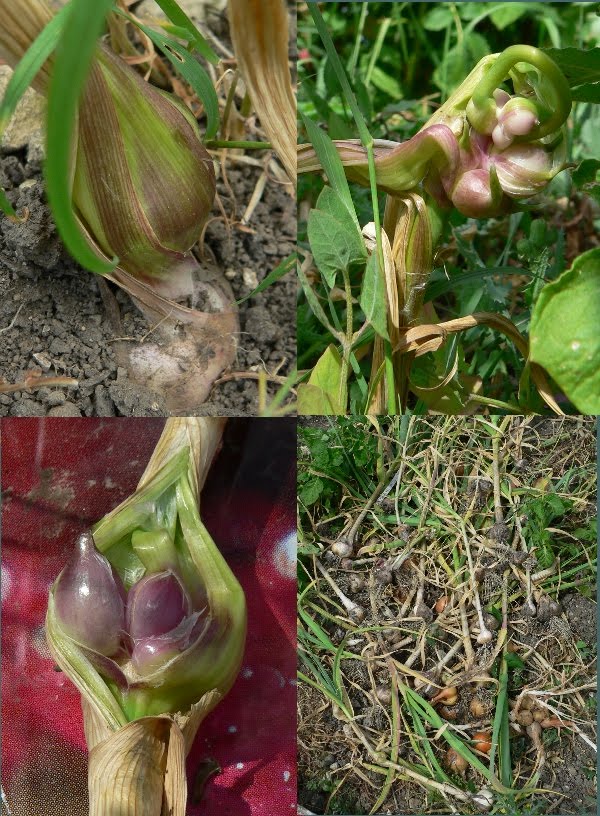 It is the first time since I have had the allotment that I can pick onions and garlic and leave them in the sun to dry.
Raspberries and foxes
4 pounds’ raspberries in two days: that’s a proper gluttony! My husband made a tasty sauce (with flour and vinegar) for our chicken tonight and I am trying to freeze some individually…
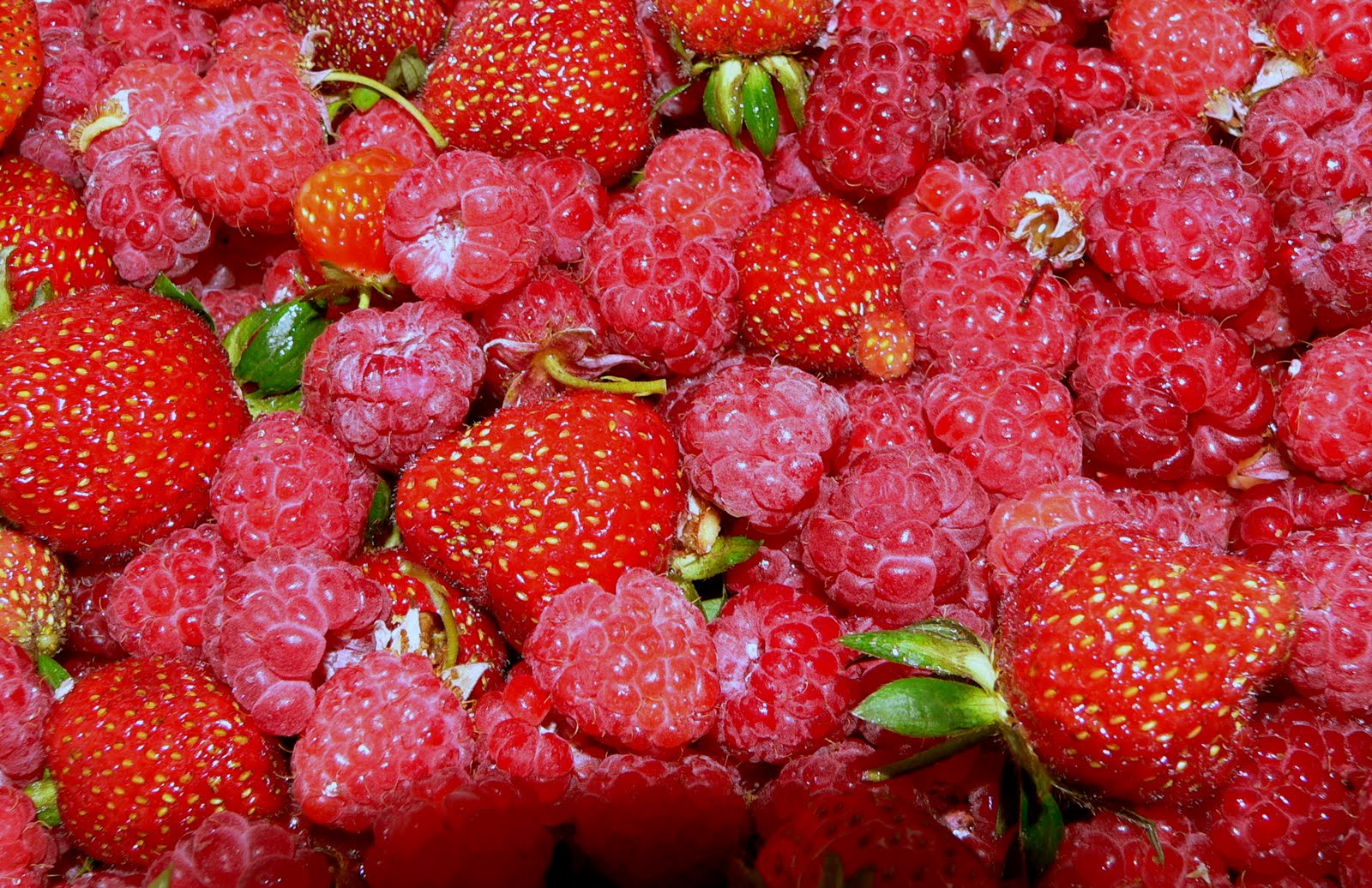
It took ages to pick them, and while I was inspecting the last few plants last nigh around 10 I saw the fox I had thought might be visiting the allotment: beautiful she is, and bold – she did not leave when I tried to scare her. But obviously we have a problem.
Waiting for the Eurostar…
… to go home and see what’s happened to the allotment over four hot days without my care – hopefully we have had some rain in the night as forecasted, but i’m especially worried for the greenhouse. If they have not wilted, though, I would expect plants will have grown massively!
Speed of growth is certainly increasing. On Friday morning when I last was there, I picked a big punnet-full of raspberries and strawberries, all ripened over Thursday. Pity the strawberries are not doing too well this year, with taste ranging widely from foul to heavenly.
The last time I saw the plot someone had also trashed through my nettles, damaging some broadbeans in the process, which did make me really sad, adding to the depressing experience last week of damaging two trays of seedlings while reorganising the greenhouse around the vent that I hoped would prevent overheating while I was travelling.
On the other hand, with the positives, the new grape Phoenix that I bought at T&M’s to expand my vine was bigger than expected, with flowers on it and seemed to take really well.
Some butterflies have started to appear too and I saw a small white and two admirals on Thursday.
— Post From My iPhone
Strawberry spinach
Chenopodium capitatum, of the family of weed goosefoot and the seed quinoa, is a pretty little plant that produces edible leaves (to be eaten as spinach – cooked, or raw but in moderation) and red berries at each leaf node, which American Indians used as a dye, and when ripe should taste like wild strawberries.
 I have tested the leaves, which bulked up my salad for work very nicely and look forward to try the berries!
— Post From My iPhone
GO experiments update
The salad cardboard collars are regaining ground as slugs have annihilated one unprotected head.
Tree spinach have got leafminers, though.
—
Although I had to spend the last two evenings behind a watering hose (which you know I hate) the heat has pushed all the crops and last night I had salad made with my own strawberry spinach and broadbeans, followed by a handful of sift fruits.
Oh the joys of reaping…
— Post From My iPhone
How I came to make elderflower cordial
Wood pigeons like to land on the gooseberry bush, all staked and netted as it is, in search of fruit, but they only manage to break branches and make all the berries fall on the ground. I recovered a good bowl-full, but they are too hard to eat yet and too few for jam-making, so I thought I would cook them somehow, and like I discovered last year, elderflower cordial is an ingredient in most of the recipes… so I set about making some.
I made some last year too and I enjoyed drinking it over the summer.
There’s plenty of recipes out there, with roughly the same ingredients but in wildly differing quantities: difficult to decide which is best, especially with regards to the use of chemical preservatives: citric acid use varies from 2 tsp to 75 g!
I have decided to try a variation on the BBC’s recipe as follows:
- elderflower heads
- 500 g organic caster sugar
- 1 unwaxed orange
- 1,5 unwaxed lemons
- 1,5 l boiling water
- 50 g citric acid
I have not tasted it yet but it has been infusing for a day and smell deliciously citrussy, maybe a bit too much for an elderflower concoction…
PS Argh it IS DEFINITELY too citrussy, and not quite enough sugar! Why didn’t I use last year’s recipe in the first place?!?
PPS doubling the sugar and halving the citric acid does the trick
— Post From My iPhone
About Me
 M.Paola, that’s me
I got my first allotment in the UK in 2007 and started growing my own food. Learning as I went along was not enough, so I studied horticulture. Faced with the horticultural warfare, I became a conscientious objector: I use no chemicals and support organic principles and regulations.
Brexit gave me a new life in the Netherlands, three new plots by a nature reserve and an MSc in sustainable food systems.
I write in my personal capacity and, as a language perfectionist and a non native speaker, I keep reviewing my entries’ text for clarity.
Some Rights Reserved

This work is licenced under a Creative Commons Licence.