I cook every meal. I like big portions, but I have little time and patience, so what I usually do is to cook a quick, big pasta, or pizza or main course and veg (recently I have also started cooking more than I need for the meal, so that I can take it to the office and eat healthily in the process). Hassle-free.
However, given the size of my plot (and apart from soft fruits and some gluts) most other produce I get in moderate quantities, a bit at a time, which requires me to change the way I cook.
- Produce is fresh and needs to be eaten or processed quicker, because it goes off and because tomorrow there will be something else fresh ready to eat;
- I throw away much less, and make do of more, because I have much less and because of all the work that goes into it!
- My native stock of recipes does not necessarily cover the amount and types of veg/herbs that are available to me.
In this situation, which is surely better for the environment, my finances and surely my health, more creativity is required.
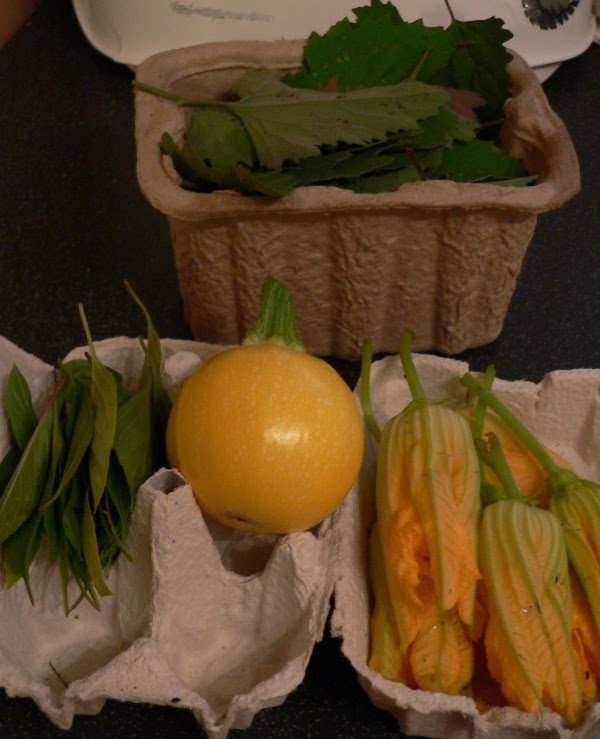 Last night, for example, I found myself with a punnet of tree spinach (Chenopodium giganteum), a single courgette Summer Ball, five or so courgette flowers, a handful of Thai basil (which smells of aniseed) and a bunch of sage. My main course was supposed to be sole (not that filling). How to use up so little and ill assorted veg?
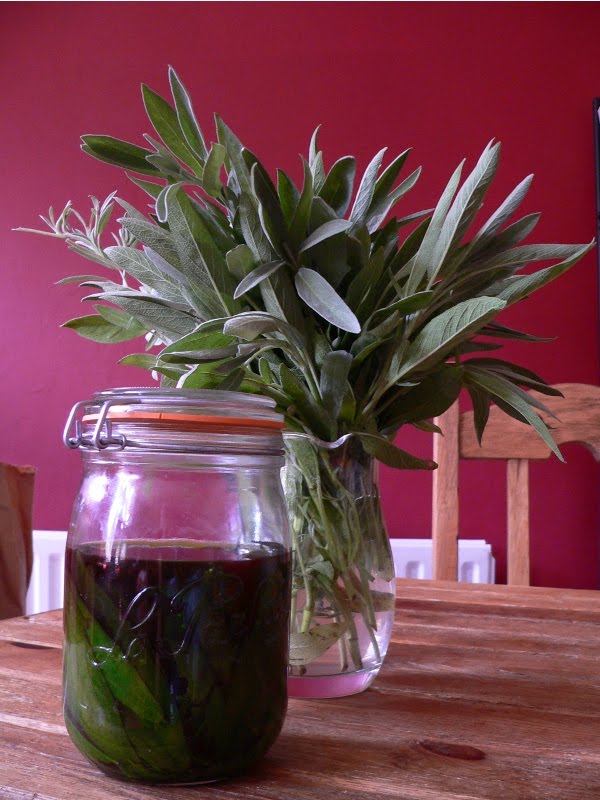
I kept the sage (in a vase with water) for focaccia tonight, but worked out a set of quick recipes for the rest.
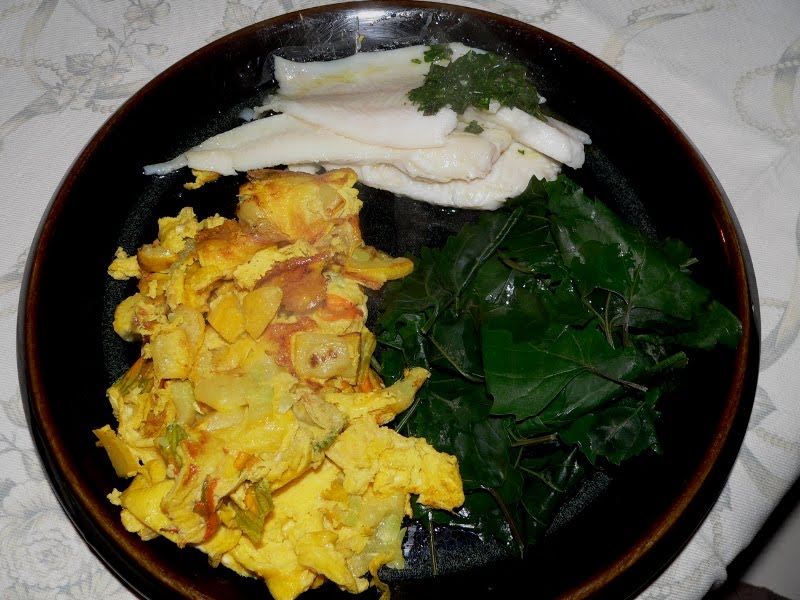
Quite elaborate in terms of amount of crockery and pottery they required, the recipes produced a good dinner which my husband liked (which is always a good thing, isn’t it! :)). I blanched the spinach and served it plain with a drizzle of extra virgin olive oil. Simply pan fried the sole, but accompanied it with a Thai basil pesto made by mixing the chopped leaves with some more oil. And then bulked up the courgette and flowers by making a small omelette. A bit more proteinic than we would normally eat, with the sole AND the omelette, but the different tastes did not clash, rather went reasonably well together.
Previously I had mostly used small quantities to make stir-fries, to be eaten on their own or as pasta sauce, but it was interesting to be a bit more adventurous for a change!
Now I just have to improve my dish arranging technique and my food photography skills! ;p
By the way, the tree spinach tasted more strongly than normal spinach and had a tougher and slightly rougher texture, which I liked, although it took ages to clean it as it was affected by black flies on the underside of leaves.