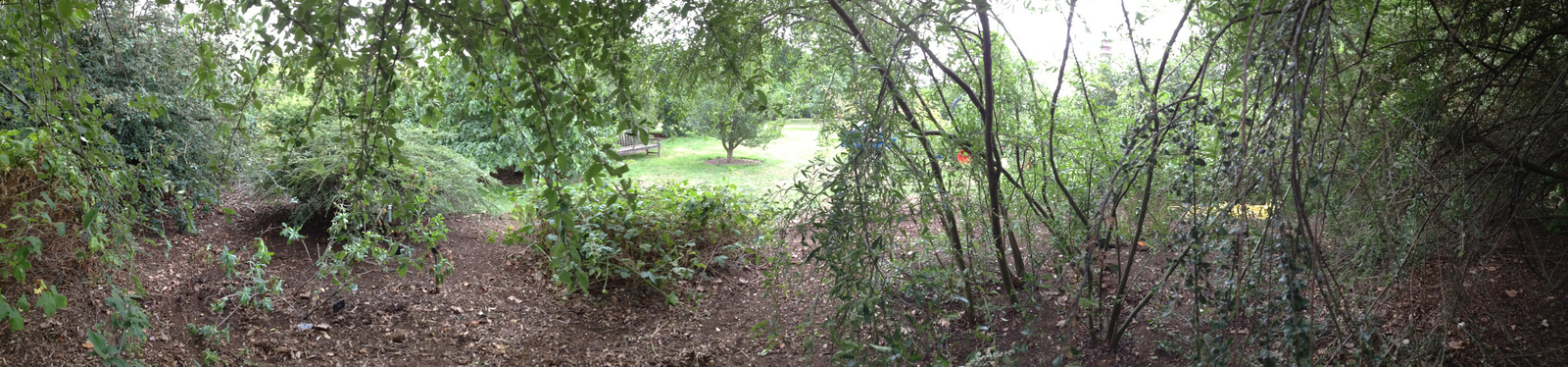
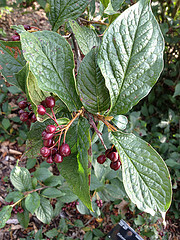
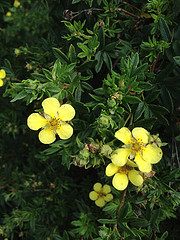
Orto di Casa Cecconi

My first allotment, and then one thing leading to another…

  • Spiraeas (Week 18, Wednesday)

    Was finalising the stockcheck of bed 435-03 today, which is Spirea central. This is one of the tidier beds, with plants well within their own boundaries for the great part. But a couple of the labels on the Spireas got mixed up, so I had to undertake a bit of investigative work.

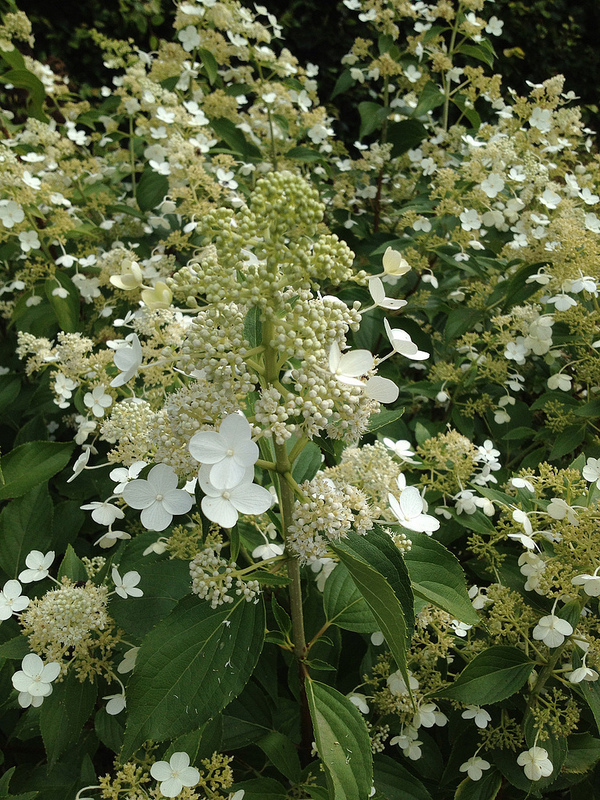
    Internet at the ready, I started to observe the plants. Luckily, most are flowering or have dead flower heads still visible, because the leaves of Spiraea, albeit all different, are often only slightly so. The flowers are a bit easier to interpret. There are two main colours: white and pink (which is either pale or bright) and two main inflorescence types: corymb (flat) and panicle (pointed). At the very least you can spot whether a label matches the species’ combination of colour and inflorescence type or not, in which case the plant might need verification.

    And that way I found a pink panicle Spiraea that was carrying a white corymb one. And also found a mix of pink and white flowers in the same shrub, which, after a good look at the leaves, told me that some suckering shrub had expanded into their neighbour. All the notes I am taking are going into my stock check, which I hope will help my colleagues restore the beds to their glory.

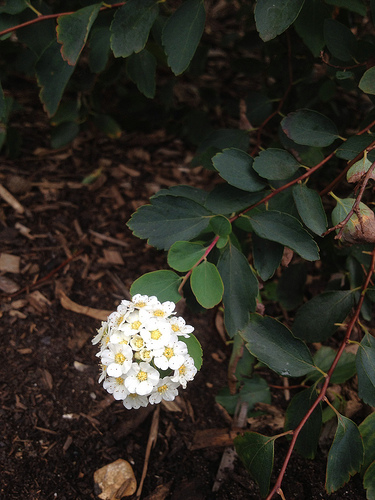
    S. crenata

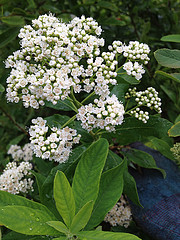
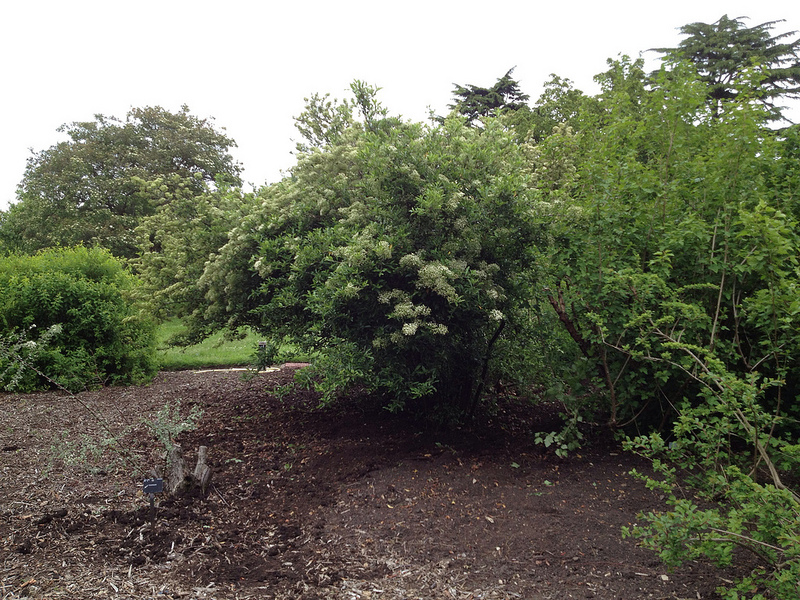
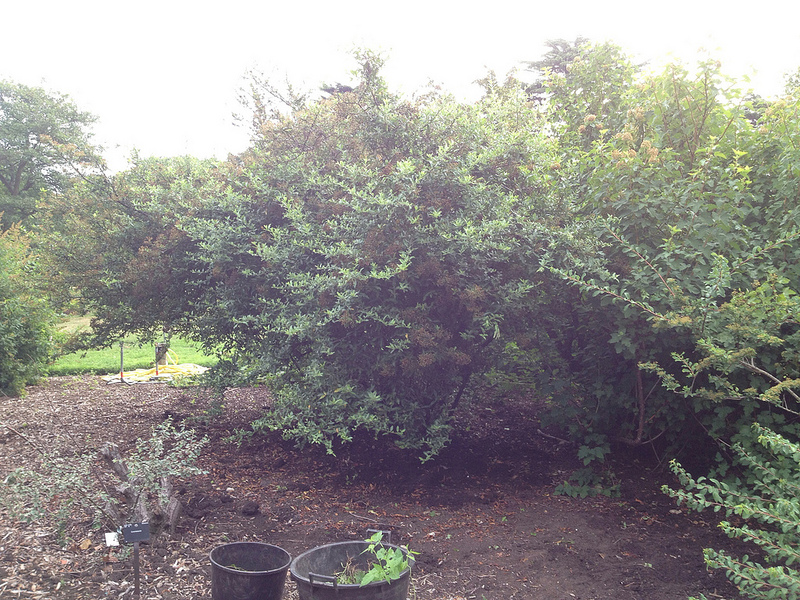
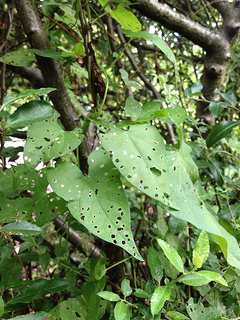
    They are starting to grow on me, Spiraea, and some are really lovely, such as the S. crenata in the picture, with white flowers, dentate obovate leaves that become dark green when mature, and reddish stems. It originates from the Caucasus and is not suckering.

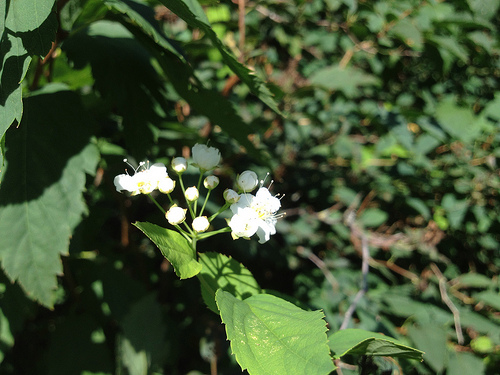
    S. chamaedryfolia ‘Transiens’ 

    Or even the suckering S. chamaedryfolia ‘Transiens’ with white flowers and larger, dentate ellliptic leaves, more similar to a Neillia or a Kerria.

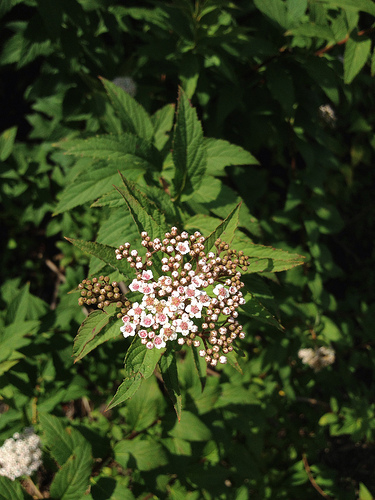
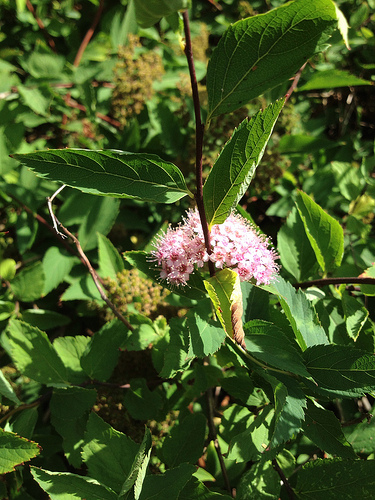
    Here are a few more – enjoy.

    S. virginiana
    S. x fontenaysii
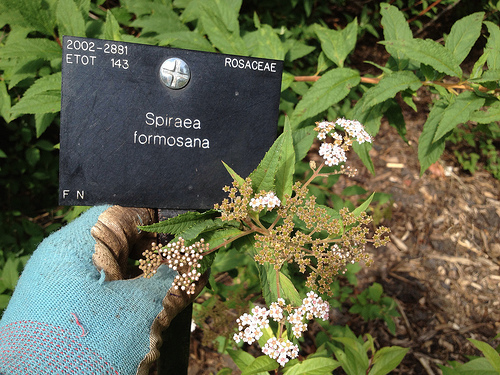
    S. formosana

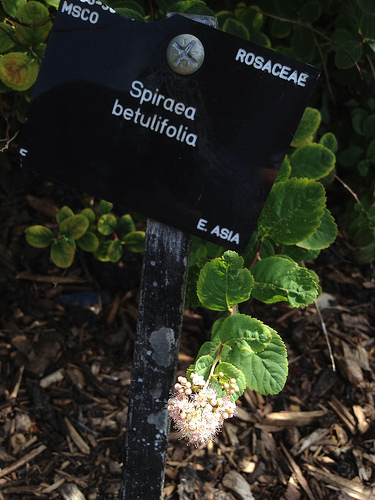
    S. betulifolia
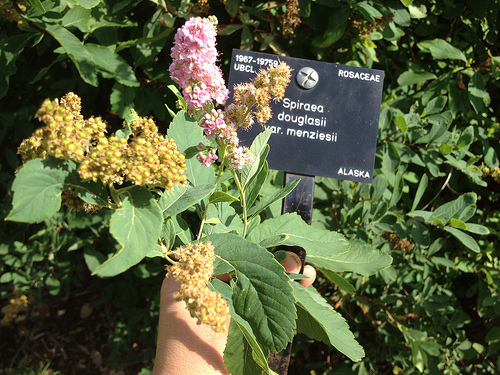
    S. douglasii var. menziesii
    S. nipponica
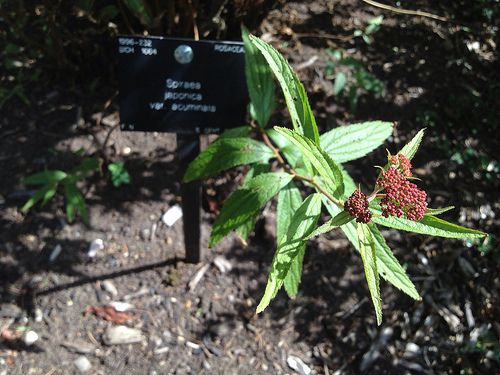
    S. japonica var. acuminata

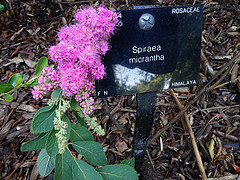
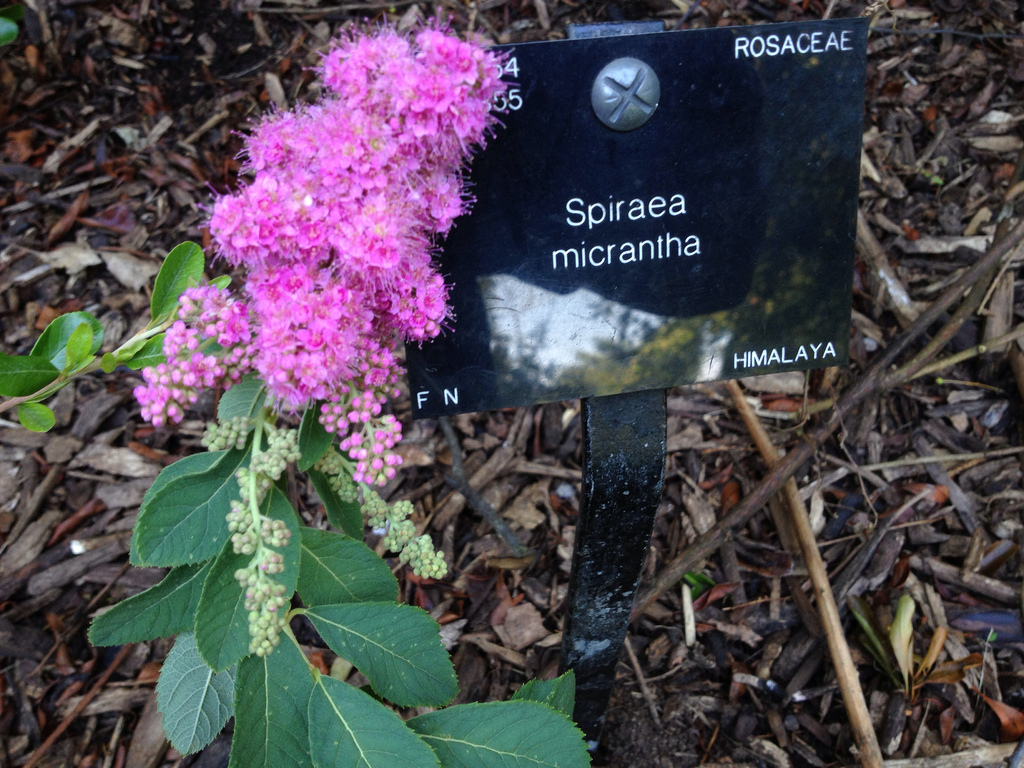
    S. micrantha
  • The return of the bindweed (Week 18, Monday)

    I wrote extensively about bindweed and my experiment to see how long it would take for it to regrow, once carefully dug out from as deep as possible in the entrails of the earth…

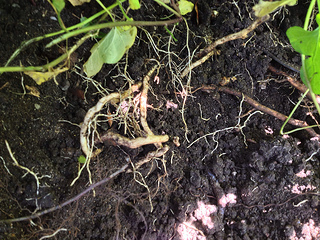
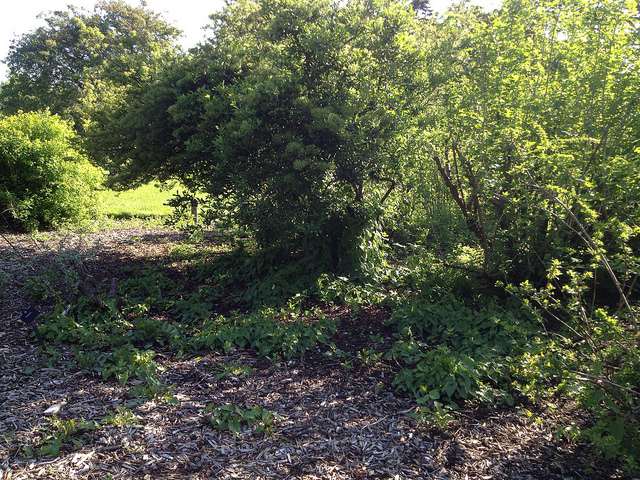
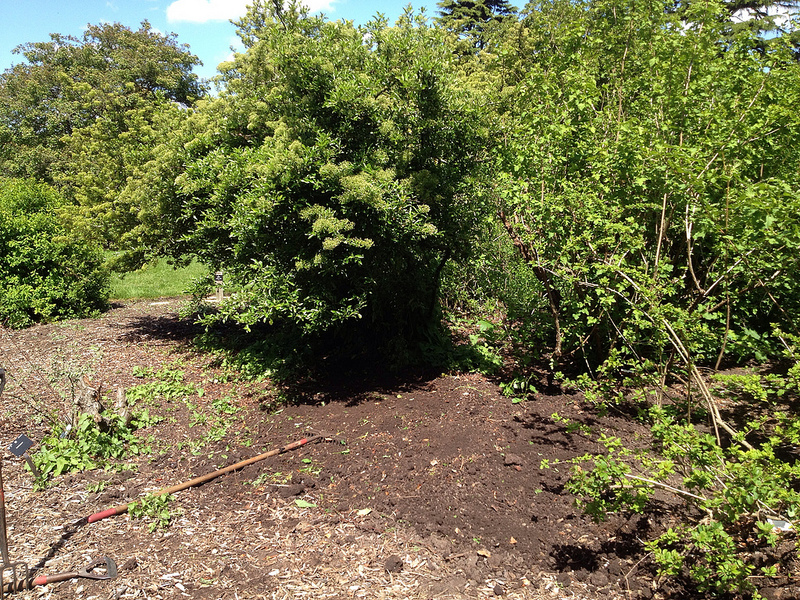
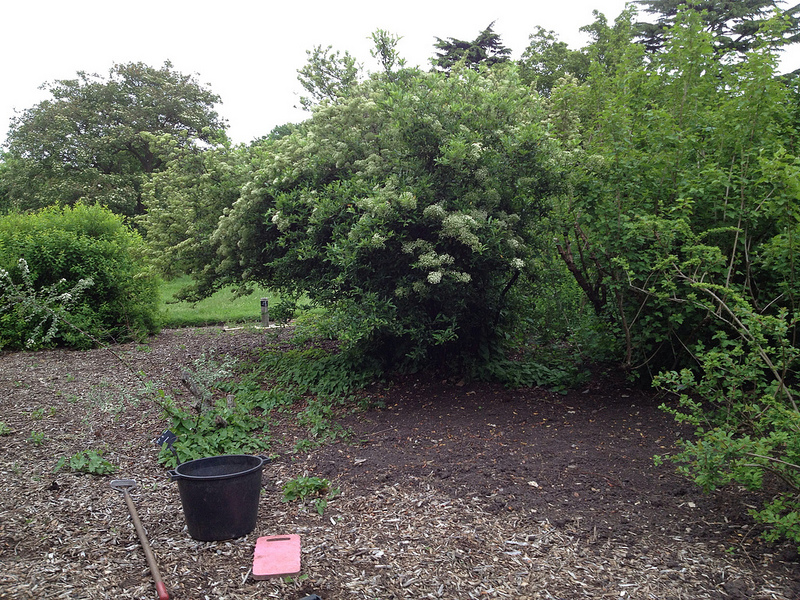
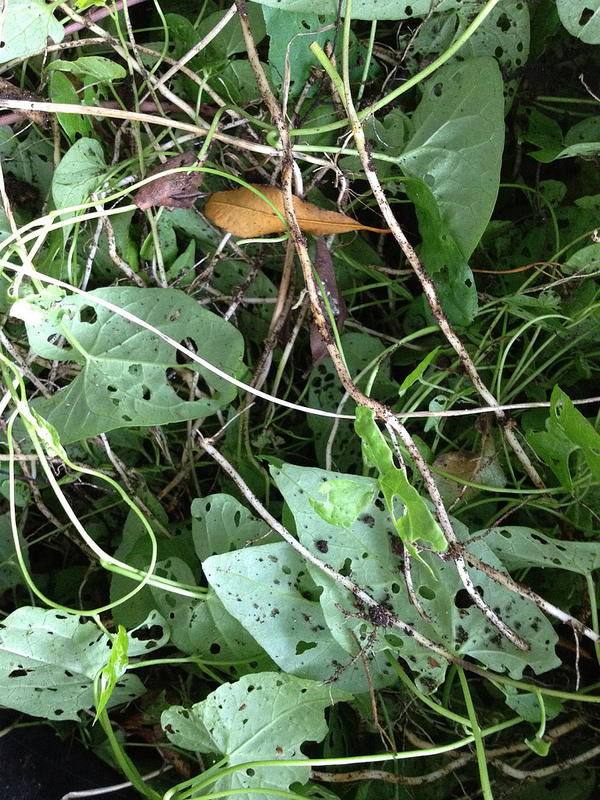
    In any case, here is a photographic summary from the first week of June, when I carried out the clearance – it took more or less a full time work day over two days, which is a considerable investment of time but…

    The size of the roots

    Day 1 start
    Day 1 end
    Day 2 start
    Day 2 end

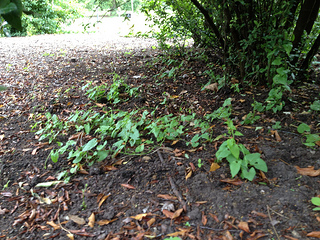
    … I have since kept an eye on the Pyracantha and nothing much has happened, until this week, exactly two months later! There is a handful of bindweed out, with weak, slender roots, most often attached to a fragment of rhizome I forgot in the ground (you know because it’s bigger). It took me only an hour or so to get rid of it today (I spent the rest of the day doing general weeding).

    Size of the roots
    Size of the patch
    … and it’s gone again!

    The Pyracantha does not show any signs of suffering at all from my digging around it, the weed has been at least weakened, which is what you would expect from the first go at it. The amount of time spent on it seems eminently reasonable over the two months, with the advantage of no extra side effects, intended or notexpected or unexpected ,  from the use of chemicals.

    I was so wowed when I realised it was a full two months since the weed had first been cleared. I was expecting that a good job would have a good result, but not this good. The dry weather conditions are likely to have slowed down the recovery of the bindweed, but still…

    Pest at work on the bindweed

    By the way, it looks like some kind of pest feeding on the bindweed, which will weaken it further: isn’t nature great? I think this is one of the major pluses of working with it rather than against it (to use a convenient phrase, although not perfect), allowing an ecosystem to form that balances itself and mitigates problems.

    Rather unfortunately, however, I do not have a control sample to my trial – you know, like proper controlled scientific experiments work, with a sample of the status-quo to compare the novel results with. In fact, the bindweed on the canes that I showed in my previous blog post was never sprayed. They were pulled out. Well, too bad. 

    I still think this is an achievement for the cultural method over the chemical, and has to be celebrated.

    Note

    In the last two months, from observation and personal experience, I have also developed a theory of weeding that goes: the size of a patch of weeds is inversely proportional to the weeder’s will to tackle it at the time

  • Prunus laurocerasus (Week 17, Thursday and Friday)

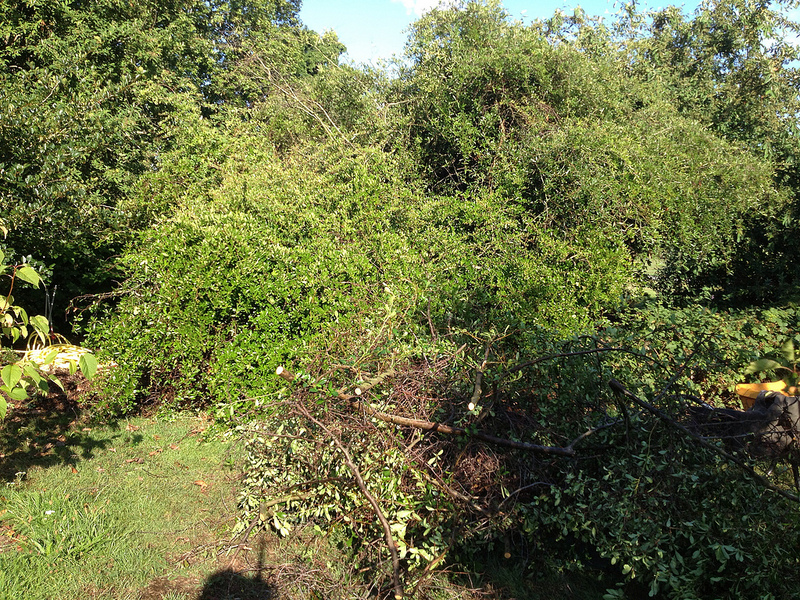
    I have spent the last two days dealing with a massive plant of Prunus laurocerasus I had my eyes on since shortly after I started on the South Canal beds.

    Bed 437-02, as it is known to the Kew-initiated, had two massive prostrate species of Prunus: laurocerasus and laurocerasus var. salicifolia. We had tackled the P. salicifolia with the 3rd year student earlier in the season, which took a little more than a day but was very satisfying to do.

    Prunus laurocerasus var. salicifolia after pruning

    The other day, after talking to my manager, who mentioned we should cut back all the plants that are straying into the grass, so that sward can mow the lawn without obstacles, I decided to give the other Prunus a go on my own, even though it was a bit daunting. It was useful in order to finish once and for all my stocktaking of the bed as well (I have already done the preliminary round here).


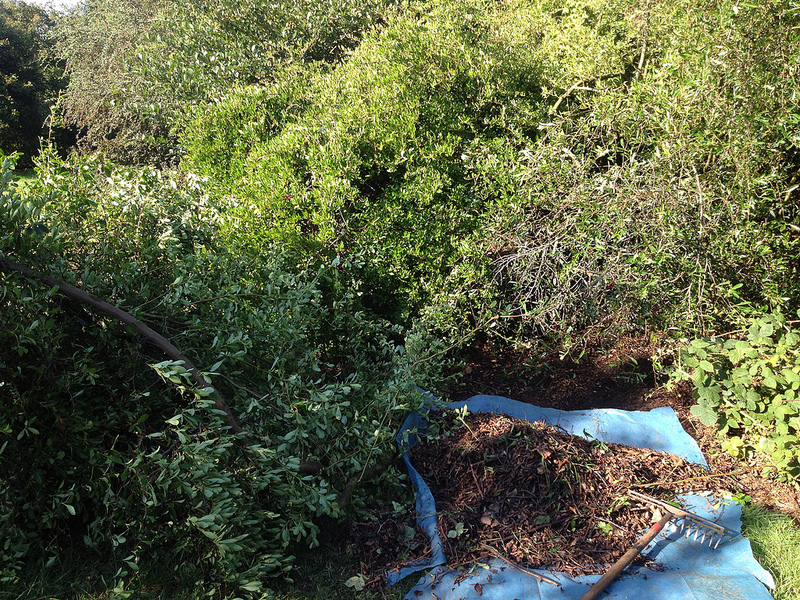
    It took me two days, with the exception of some time spent weeding, and I still need to tidy up and rake the dead leaves away.

    It was, in fact, a massive task, some 5 load-fulls went to the compost heap, and stems up to 15 cm had to be cut with a saw, so that I am pretty tired at the moment, but it looks so much better now: it’s airy all around and no more Spirea are swallowed by the Prunus‘ overgrown branches – I’m proud of it and tonight I showed it to a friend that came visiting (poor thing, putting up with all my excitement for these plants, their shape and health!).

    I forgot to take “before” pictures, except a couple, but do imagine it extended all the way into the Spiraeas on all sides… it was such a large area that I did not even manage to take proper panorama pictures!

    Before, internal side
    After, internal side
    Before, external side (note also the intruder
    Aesculus weed grown to considerable size)
    After, external side
    An overview of the end result, external side of the bed
    (slightly deformed pic)

    Panorama of the internal side of the bed (click to enlarge)

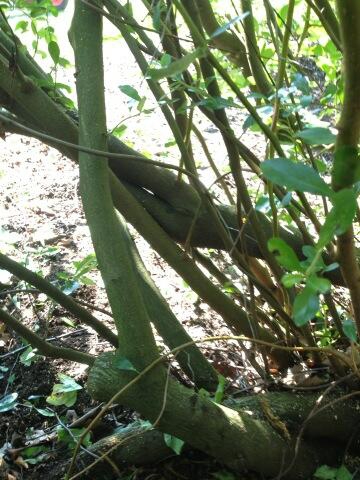
    P. laurocesarus is a plant I know well, as both my parents and auntie had it as a hedge all around their houses, and I have grown up with it. It is a very tough evergreen plant, whose leaves are very resistant to decay, and it grows so thick that it shades anything out. The one I tackled formed such a dense mat that it provided shelter for a range of wildlife: a badger sett and two old birds’ nests is what I found… and I suspect there’s more under the huge plant that is still left!

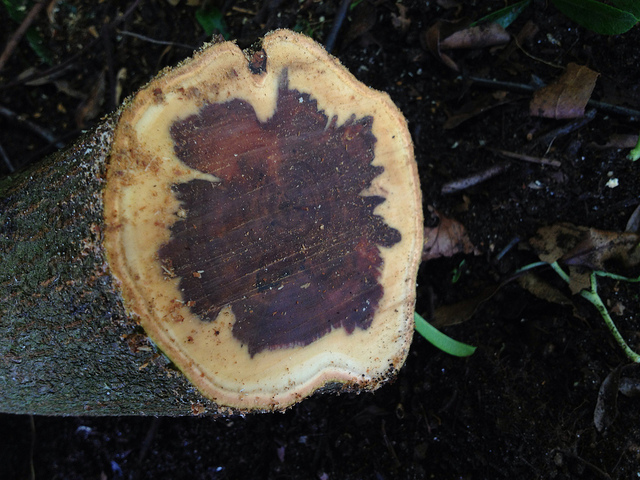
    One thing that I did not remember from growing up, and that made me curious was that the stems I had cut were easily ringbarked, as the bark (epidermis + phloem) peeled off, leaving a rather smooth, and sticky, xylem surface. The phloem, on the other hand, was spongy and reticulate.

    Ringbarking P. laurocerasus: xylem, phloem & epidermis
    Phloem meshy tissue

    Phloem tissue: layers visible

    Only four weeks to go, now, and still so much to do…

  • Under cover (Week 17, Wednesday)

    It was raining today and as I was not feeling too well, so I asked to work indoors, and was sent to the Princess of Wales Conservatory, with some lovely people, doing weeding among weird and wonderful plants.

    Hope you enjoy their pictures, while I’m off under cover again, of my bedsheets this time.


    I am sorry I failed to look for the labels, but do visit the Conservatory if you want to find out what they are! I am sure you would love it, and once a year at the end of the winter they have an orchid festival, which is rather spectacular…

    Oh, I also stroke an acquaintance with the very special chap down there: call him Biocontrol (he does have a proper name, but I can’t remember, I did say I’m a bit off today…). He and his friends Chinese dragon lizards (Physignathus cocincinus) play a very important part in keeping pests under control in the Conservatory…

    … if you visit, keep an eye out for them. The first time my husband and I spotted one was during the orchids festival a couple of years ago!

  • The Quarantine House (Week 17, Tuesday)

    Today we had the pleasure to visit the Quarantine House, where plant material that gets into Kew (from
    donations and expeditions) and out of the gardens (for example to repatriate seeds to repopulate areas in the wild for which conservation had been undertaken) is scanned and kept to ensure no pest or diseases are released that could affect Kew’s over 30,000 plants, or any of the involved countries’ biodiversity.

    The facility is new and state of the art, to comply with licencing authorities’ requirements: it was designed for maximum containment and for sustainability. But an important concern was also to create a controlled environment that was affordable to run, as there are cases in which very expensive facilities failed to ever be used because of spiralling maintenance costs. And expensive facility this one was, built on a World Heritage site and a site of archaeological interest, with all the extra measures that demands.

    The advanced technical features to contain risk are really special (fascinating to hear about the negative air pressure system that would suck any broken glass in, should a disaster happen, which is unlikely because the glass is double glazed and laminated to boot; and did you know that silicone is not a good enough insulating material, as it gets damaged by UV rays? –  a more detailed description of the features is available online. The latest technology is not all that is needed, though.

    The duty of care and chain of custody requirements when dealing with such sensitive material as internationally moved plants requires that a sound process in place: legal and healthy are the two keywords here, something that does require extensive paperwork (for example the collection permits for expeditions), specialist skills, and special licences.

    The building is licenced with a Plant Health Licence by FERA and the Forestry Commission, and needed to get an Home office licence for controlled drugs, to deal with some plants such the genus Erythroxylum. As the point of entry for pests and diseases are multiple, soil needs a special permit to be dealt with, which Kew is considering. And because Kew is also the UK CITES Scientific Authority for Plants, the Quarantine House also works in partnership with the UK border forces to ensure that the Convention is enforced and that material of conservation interest is protected.

  • It’s raspberry time!

    I have not written for a while about the allotment, as Kew is taking up most of my time, energies and generally most of my thoughts… However, although it is the case that I am not doing as much as I would like to (isn’t that the case every year?!?), I am growing, picking and weeding as much as any other time, and I have quite a few crops at different stages of growth.

    And – I want to mention – I am particularly grateful to self-seeders this year: tree spinach (Chenopodium giganteum), some of last year’s potatoes, chamomile (Matricaria recutita) which are providing me with unexpected and much welcomed extra crops.

    But, back to my reason for writing: it’s raspberry time again. That time of the year when you cannot keep up with picking them, every couple of days you get four punnets and cannot take any more… because you have:

    • eaten them raw, 
    • frozen them (they do freeze well: rinse, pat dry and place on a freezer tray one by one, then once they are frozen they can go in a tupperware for later use); 
    • made compote (I do not feel like making jam at the moment, too time consuming, but compote is easier: rinsed fruits, sugar – not as much as for jam – some lemon juice and cook until soft, then put in a jar in the fridge) and spread it on homemade bread. 
    Then I got an inspiration: put them into my muffins, of which I eat two a day for breakfast, to keep my gardening going.

    So here is my usual muffin recipe, adapted for raspberries. Makes 6-10 depending on the size of your moulds (I use silicone ones).


    Raspberry and coconut muffins

    Dry mix

    400 gr plain flour (I sometime mix plain flour with up to 150 gr of wholewheat or whole spelt)

    3 tsp dried yeast

    3 gr bicarbonate of soda

    75 g dessicated coconut

    Wet mix

    2 medium eggs, lightly beaten

    300 ml double cream (sometimes I use a 225 ml tub then add more olive oil)/greek yogurt is an alternative

    a glug of olive oil

    1/2 tin coconut milk

    250 g sugar

    Prepare the dry and wet mix separately, then pour them together and stir well. If the dough is too dry, you can add a splash of whole milk. Add enough raspberries (maybe 200-250 gr, enough to get them in all muffins, but not too many that would get the muffin soggy) and fold them in, taking care not to squash them.

    Pour in the moulds and bake at 180C (no fan) for 45-50 mins.

    Enjoy!

  • Droughts, goodbyes and Physocarpuses (Week 16, Friday)

    It seems that most horticultural traineeships/apprenticeships are applied to in January for an August start. That means that July in the final month for the participants in the schemes and today three of our trainees have gone. I will miss them, we had a good time together!


    Other than that, today too I’ve been working hard on the stock-checking project, for as much as it is compatible with watering in this prolonged drought.


    As I mentioned before, I work over 6 beds, maybe 100sqm each, arranged as a square and on all the trees that are enclosed by them. Hose pipes are quite heavy to carry around, let alone the sprinklers, and as you know I have been on my own this week; besides, I have had no use of the tractor of late. 

    Watering entails that you put down all the sprinklers in the morning… 

    … and that you take them away and tidy up at night; not every night, especially in a drought when you may leave the tap on, but certainly before a weekend, as it would not be safe or pleasant for visitors to have to negotiate their way through pipes and sprinklers, especially outside of the beds.


    Kids seem to love to move them around and get wet, their parents mostly encouraging (who doesn’t like a bit of fresh water in this hot weather?!?), but it is not safe as that is not drinking water we use for watering plants!

    But in the time remaining, I have again worked on freeing up a few shrubs from their overgrown neighbours so next week I can check the plants in the bed. Physocarpus opulifolius was my main target today, as one of the specimens had grown over, shading them out, at least 4 shrubs.

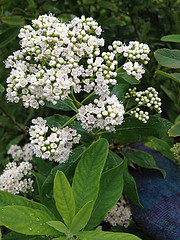
    A lovely plant, with curving branches and leaves similar to Ribes; creamy white flowers in corymbs, loved by  bees, appear in June and then turn into inflated capsules from green to orange-red.

    The common name for it is “ninebark” presumably because the pretty reddish bark peels off.


    Anyway, it’s a lovely plant but suckers large and wide, besides self-seeding quite profusely, so I was glad my colleague Nick brought me a skip… that’s the final result in the pictures.


    It has been considerably more time consuming than expected, stock-checking, but I am still confident I can finish it… although I am not quite sure about the overgrown Cotoneaster bed I have never even had a look at so far…