Orto di Casa Cecconi

My first allotment, and then one thing leading to another…

  • What can you do with lemon balm? And other plants

    There are plants that I introduced once on the plot and now grow largely unasked. Their weedy behaviour means they multiply and tend happily to survive slug attack. They are usually loved by pollinators.

    It’s a pity to weed them out, given their success, so I have decided to find a use for them. I refer in particular to three plants: opium poppy (Papaver somniferum), borage (Borago officinalis) and lemon balm (Melissa officinalis). Let’s forget the poppy for a moment, but when a plant has ‘officinalis’ in its name it means it has been used in herbalism as a medicine – it’s not just a pretty flower.
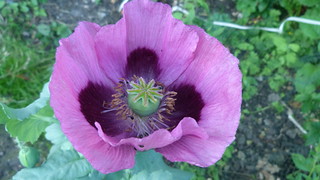
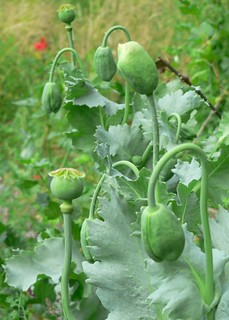
    Opium poppy, I discovered a couple of autumns ago, is the very useful source of poppy seed.

    I love poppy seeds in my bread, so I have been collecting them for the last couple of years, trying them both as is and dry toasted. Number one plant sorted.

    By the way, not all poppies have edible seeds, but the opium poppy (whose seedpod milky sap incidentally will make opium, the reason why the plant was introduced in England, then becoming naturalised) is THE ONE. Warning: apparently, if you eat too many you might test positive for opium.

    Oh, and the seedheads make lovely winter display in a bunch at home.
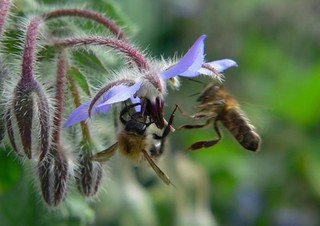


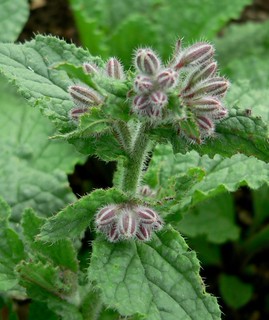
    Then, earlier this month, I tried borage leaves.

    Borage leaves are used in Genoese cuisine to make pasta filling, and I liked them cooked, tasting very much like nettles. They can be also eaten raw in salads, taste apparently cucumber-like, but need chopping finely, they are so hairy.

    It turned out, however, that they contain an alkaloid poisonous to the liver, so eating too many is not a good idea. Number two plant not really sorted.

    But they can be used as green manure as the taproot accesses nutrients deep in the ground – that’s sort of how I had used them in the past. And of course bees adore the flowers, which can be safely eaten, and are usually added to ice cubes as drink decoration.
    Interesting fact: with seeds they make starflower oil, a GLA supplement.
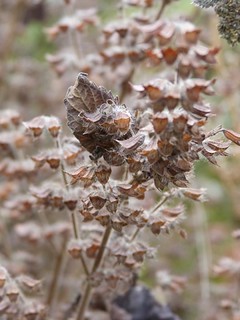
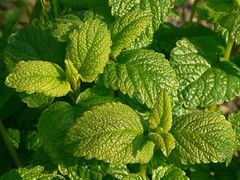
    Finally, I decided to tackle the tons of lemon balm on the plot. Lovely smell, but they grow in every nooks and crannies!

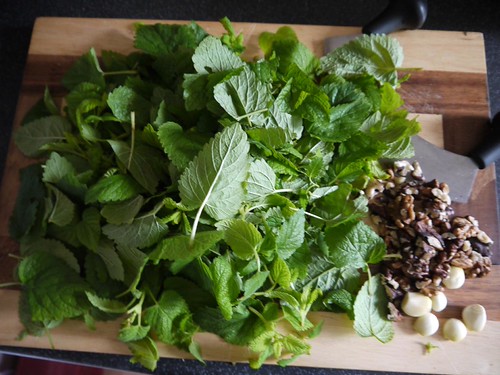
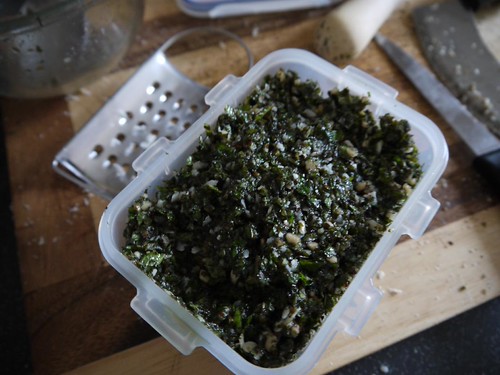
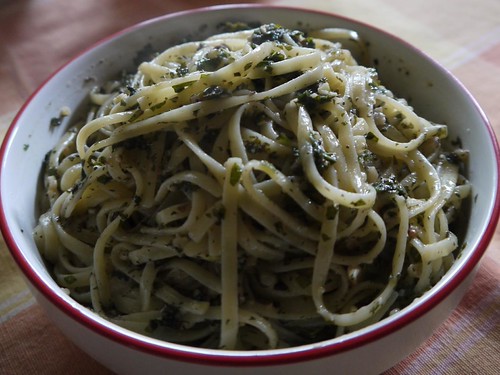
    First search yielded tea recipes to be made with fresh or dried leaves. That would not however sort the quantity issue for me. Then, my friend Carl suggested I have a look at the Plant for the Future database: a note at the bottom of the page indicated you could make pesto. Eureka! Search online for lemon balm pesto and you will find an abundance of recipes. I went for lemon balm, walnuts, garlic and parmigiano cheese, then soak in extravirgin olive oil. On pasta, it did pass the husband test, and it is fairly quick to prepare. Here’s how it looked at the various stages:

    Chopping


    Ready and soaked in oil


    Lemon balm pesto linguine
  • Totally undeserved yet humbly accepted Liebster Blog Award

    My lovely friend Carl Legge, truly generous as he is, did think about my ailing blog when making nominations for the Liebster Blog Award, in an attempt to encourage me to write more.

    Thank you Carl, I am honoured by the nomination and humbled – would love to blog more, even though at the moment I seem to be lacking inspiration – and, most of all, time. 

    All my free time I spend keeping the plot tidy (endless pursuit as it is), studying horticulture (in order to be able to do more effective plot-tidying…) and translating into English an Italian recipe book of the organic, “real food” persuasion (you have to use up all that produce in the end!). 

    But I will, Carl, I’ll come back and write about what I’ve learnt: you are an inspiration with your thorough understanding and openness to sharing.

    In the meantime, I keep the picture albums and the interesting links up to date, as that is less time consuming. And I sometimes tweet about my allotment.

    The Liebster Blog Award comes with some rules:

    • Thank the person that gave you the award in a post on your own site
    • Nominate up to five blogs with less than 200 followers
    • Let the nominees know they’ve won by leaving a comment on one of their posts
    • Add the Liebster image so all your readers know that you are a recipient.
    Bad enough at thanking people, I’m even worse at reading blogs – talk about going out of my comfort zone! Really, I do not read blogs regularly. I follow links on Twitter and search on Google, that’s about what I can manage in between all the rest, and how I find interesting content, and people.
    Besides, any blogs I have occasionally followed have far more than 200 followers: Carl’s Llynlines with his allround sustainable life pursuit, Saidos da Concha with Constanca’s home made life,  Il pasto nudo with Sonia’s “rebirth” in real food…


    Promise I will look out for a couple of blogs with fewer followers, nominate them and let you all know… and you could suggest some for me to have a look at?

  • Caring for the soil – part 1: crop rotation, companion planting and intercropping

    As you know, I have tried do grow organically over these four years or so. I have always believed that working with nature makes more sense than working against it: fire-fighting against pests with chemicals, for example, instead of working in a balanced ecosystem with pests and predators even themselves out – that at least is the thinking.

    In my efforts to do and know more, I have been a member of several organisations in the organic sector, among which the Soil Association, but somehow I never bothered why they were called like that. Then, I had a eureka moment earlier this year, when I read something: you should not be fretting so much about your plants but first and foremost care for the soil they grow in, because if the soil is healthy the plants (more or less) then take care of themselves. The soil sustains all life.

    So I started thinking: how to take better care of my soil?

    CROP ROTATION

    I have practised 4-year rotation quite strictly according to Garden Organic suggestions.

    Crop rotation is an ancient system, it dates back at the very least to the Romans who apparently called it “food, feed and fallow”. It helps with management of both soils and pests, namely:

    • pests and diseases are family-specific, and some of them may persist in the soil, so if you keep growing the same plants over and over again in the same spot you are more likely to be hit; 
    • families of plants use up more or less the same type of nutrients, so if you grow the same plants over and over again in the same spot, they will use up all the same nutrients and there will be little or none left in the soil, leading to all sorts of problems (depletion, erosion etc).
    It is exactly the opposite of monoculture, which is the prevailing system in industrial agriculture. 

    Rotation works like this. Botanically, plants belong to families. Families with similar characteristics and requirements can be grouped and planted together. Plants from one group should not be planted on the same spot year on year to avoid the problems above. So you divide your plot  in areas (more easily done with beds), and rotate your crop groups. The minimum advised rotation is 4 years, which means you will only plant a group of families in one area once in 4 years. 

    Garden Organic suggests to divide plant families in 4 groups (I provide links to Wikipedia but do not bother too much with family names as they change all the time as botanists becomes clearer which plants belong to which family, and whether a family is still a family or some sort of sub or super-grouping of something else).

    The groups are labelled A,B,C and D, which I find quite convenient to mark my beds on the plot:

    A:  solanaceae (the nightshade family, including tomato peppers and potato), cucurbitaceae (your pumpkins and courgettes);
    B:  alliaceae (garlic and onions);  papillonaceae (peas and beans, vetches and clovers);
    C:  brassicaceae (the cabbage family, also including spicy salads i.e. rocket and cress); poaceae (the grasses, including cereals and corn); asteraceae (the daisy-shaped flower family, including most salads that are not spicy);
    D:  apiaceae (the plant that have flowers umbrella-shaped i.e. parsley, carrots, parsnips), chenopodiaceae (mostly weeds but also spinach and beets) – both families together can be roughly identified as the root crops.

    There are other families with less common plants, those are outside the rotation and can make up an extra year in the rotation or could be associated – consistently – with another group.

    Crop rotation goes with other methods of soil care, which I am planning to discuss later on.

    COMPANION PLANTING

    Of course, even within the sustainable agriculture persuasion (basically anything but monoculture), there are other schools of thought. For example, one that advocates something that is not so neatly organised: “companion planting“.  This is also about pairing plants/grouping, on the basis that:

    • some pests locate the crops by sights (mixed planting confusing them); 
    • some plants emit smells that can deter pests from other plants;
    • some plants may provide nutrients for other plants.

    There’s no excess of scientific evidence of this working – possibly because of lack of interest from science, which nowadays seem to be mostly focussed on technological innovation, genetic engineering to create new and “better” species at the forefront. But it makes sense to me and a notable example of this system was traced back to the Americas where the “three sisters”: corn, beans and pumpkins were planted together – corn providing a climbing support for the beans, which fix the nitrogen for hungry pumpkins and pumpkins shading the roots keeping weeds at bay etc.

    Yet I have not found a way to make the two systems work together, except in cases where the “extra” plants are out of rotation or within the same rotation group. Not that I have spent too much time exploring this, I barely have time to follow one philosophy, what with gardening around a full time job with travelling, and keeping the house and feeding myself and husband etc. Gardening definitely requires a lot of hands on experience and observation.

    Which reminds me it’s time to go to the plot, as it’s a gorgeous day and there’s so much to do.

    INTERCROPPING AND CATCH CROPS

    But I will conclude on a another practice that deserves a mention in this context: intercropping. To make more profitable use of the often scarce resource of space, one could grow quick maturing crops (i.e. salads) while waiting for slower crops to develop. Similarly, catch crops are used in between planting of other crops (i.e. while waiting for the seedlings to be ready in the greenhouse). 

    I know next to nothing about this, and I sense there might be a tension between wanting to produce more and the need to keep the soil in good shape – but you may know more.

    Please leave your comments if you have experience on any of these practices and how they might work together in a sustainable way.

  • Long live the chilli plants

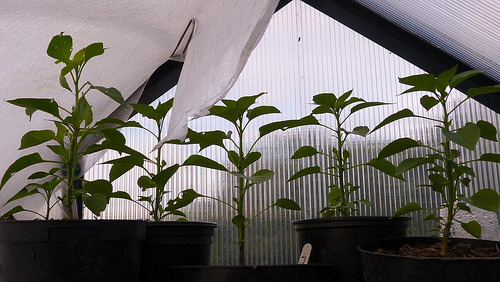
    I am not sure what has been wrong with my technique of growing chillies in the last two years. I suspect they might have taken objection to my reluctance feeding them.


    Anyway, come September they were, and are  – this year even worse – just about to flower for the first time if at all. Won’t bear much of a crop.

    Except last year I discovered chillies are tender perennials.

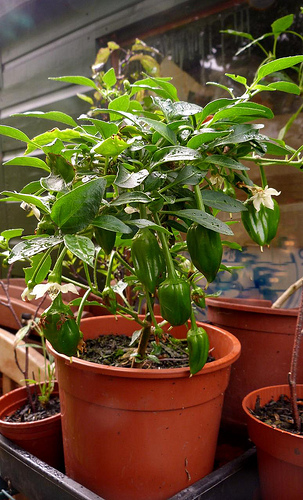
    So I took 3 pots in over winter and kept them on the kitchen windowsill. They kept flowering and produced the odd tiny chilli. The only problem was greenfly, which affected them all winter. At some stage I also petted a ladybird, that I found on the window, to try and  get rid of them. But then it was summer and I put them outside again.

    Here is one. It looks like I will get my crop from them rather than the new plants this year. So if you have not been very lucky with your chilli plants, don’t give up. They might do better next year, given a bit of TLC over winter.

    I myself am planning to make room in the loft this winter for my new and not so new chilli plants. And for my latest discovery: perennial basil…

  • Another year of elderberries

    I have not written for a while: gardening is repetitive, so I sort of ran out of topics, and I am trying to figure out how to make my pages interesting in the little time I have. Also, I am not happy with pictures from my new camera, so my old blog format does not work any longer.

    That does not mean that I have not carried on in my garden and in the kitchen finding the best ways to use my produce.

    Elderberry had a special place this year too. I made Holunderlikoer, which I love, and jam (but it set too hard so it rolls rather than spreading). Then my friend wrote to me saying she had found out elderberries had medicinal properties, could I sent her something. I researched it a bit on the web and found it is good for winter colds and coughs, and what I was after was a “rob” – which, I found out today, stands for thickened juice).

    Could not find a definitive recipe, but storage over time seemed an issue with some of them. So I made up my own recipe with info from here and there.

    My own elderberry rob

    • 500 gr ripe elder berries
    • 200 gr sugar 
    • 4 clovers
    • ground ginger and cinnamon to taste
    With a fork, pull the berries from the stalks, removing as many of the remaining stalks as possible. Wash.

    Simmer the berries until soft and squash them with a food mill to get the juice (without seeds, as they are mildly toxic). 

    Mix with the sugar and bring to the boil, adding the spices. Thicken it to a runny honey texture. Bottle as jam.

    Let’s see if it works.

  • Dry spring, wet summer

    I have started clearing the wilderness that both my plot and hubby’s had become, the endless rainshowers having not so much made the soil muddy as workable again -especially the new bit, which was compacted and very much like concrete under the spade.

    I will take sone pics over the weekend, as it is starting to look good again. And there is a lot going on, despite the indefatigable chomping of slugs and snails (I must be sowing at a rate of three times as much as I get).

    At the moment, my favourite crop is redcurrant: the red berries look like jewels dangling from among the lush green leaves, and are delicious straight off the plant when properly ripe. But some ofthe salad colours are equally spectacular, the one I like most having light green leaves with curly edges in purply red.

    – Posted using BlogPress from my iPhone

  • Pigeons-ortocecconi 2-2

    This year I have lost my gooseberries to pigeons once again. It happened in the first year when I did not know what that bush was.

    Then I netted it the second and third years, and had bumper crops.

    This year, despite the netting, they were gone and I was left with only 2 punnets, when only last week I could see plump, almost ripe berries on all branches… which I did not have time to pick. Yes, I think it was a matter of timing. Once the berries were ripe, pigeons found ways to get at them – even though they are green and barely visible. They throw themselves on the netting, bend or break the branches, and eat all they can. The rotters.

    Anyway, two punnets I got, and there might be some red berries on the newly planted bushes, the ones I hope will start cropping seriously from next year, their third.

    You really have to like gooseberries, because picking them is not for the faint-hearted. Today my arms look like I had a fight with a rather aggressive cat. It did not help that to avoid a thorn, I ended up with my hand in a clump of nettles! The British seem to like them better cooked, in crumbles, fools etc. I like them raw (and so do all my Italian friends that have heard of them). When they get soft, and from clear go cloudy, having lost the worst of their acidic edge, gooseberries have a mild yet delicious aftertaste that is difficult to describe.

    I have some with me for lunch today!

    — Post From My iPhone