Orto di Casa Cecconi

My first allotment, and then one thing leading to another…

  • Winter blues?

    For the first time in six years, since I first started gardening, I am not inclined to spend every single bit of spare time in the open air, either fiddling with some plant or other, or planning what to plant and where, or even just having a look around in the garden: I can spend a whole weekend at home without setting foot out of the door…

    .. and even from home I am not very active: for example, I haven’t taken my seed stock for the year, despite taking the seed box from the allotment a while ago – much to the annoyance of my husband, who occasionally trips on it, as it has been lying on the kitchen floor since.

    So nothing outside, nothing inside, the only garden-related activity I haven’t given up is reading my magazines in the bathroom. Otherwise, I’m pretty flat at the moment.

    Don’t understand: winter blues?

    — Post From My iPhone

  • Mushrooms and miserable weather

    Yesterday I had to spend all my time at the plot re-building the greenhouse that had been wrecked open arguably by the strong winds over the week – sunset was beautifully red, but did not manage to pick me up after the event: I should be buying new greenhouse panels – they did not last that long and at the moment I cannot afford them.

    And just to end the weekend on a high note, when I went to try and get some mushroom spawn on manure in the propped-up greenhouse today, I got so wet, bucketfuls of rain…

    Anyway, it should hold up for a while, and I got my spawn scattered. Instructions said you need a bed of at least 25cm with strawed manure, under wet newspaper. You should take all the creatures that can eat the spawn, including worms, but that seemed a bit of an overkill, and impossible to achieve anyway: my greenhouse is no sterile environment!When the newspaper gets covered in white filaments, it’s time to layer on some compost and chalk… getting chalk definitely no probs this side of the world, but the procedure seems quite elaborate – this time I will tring doing it by the book. I really hope they do grow, as the handful I managed to eat last spring were really delicious, tasty in a buttery sort of way.

  • The ups and downs of trying to be kosher

    After an afternoon at the allotment digging weeds out of the soft fruits bed, I came home and threw myself in the bath with my autumn copy of Garden Organic magazine. Someone had written a letter asking about non-organic manure. 6 months composting may well make it acceptable for use in organic gardening; however, it must be GM-free manure to start with.

    Of course, if the animal had been fed with GM feed, the fibres and discarded material even through the guts of the animal may still have GM DNA in it. I had not thought of that. Yet GM-free is on top of my agenda. And I know that animal feed can be GM in Europe. Still, somehow I had not associated horses fed without the use of chemicals in the supply chain with the possibility of GM in the feed.

    Big depression followed. I had already felt a bit defeated the other day reading some very interesting info on the website of the Scientists for Global Responsibility. It’s everywhere: it’s very difficult to keep track of all the right things to do, to source things that are ethical, sustainable, organic, especially when it’s not the mainstream ones. I have a lot of time for those that are consistently inquisitive, attentive and selective. But I can also see why the average Joe Bloggs does not care. It’s so complicated.

    And there are so many powerful interestes pushing for GM, lobbying and sneaking it in as widely as possible, that one wonders whether we stand any chance. So little concern for the possible unintended and unexpected consequences of introducing something in the environment that by its own nature is bound to spread and cannot be controlled. I was really struck, studying my horticulture books, by how often they would point out we do not know exactly how a plants carries out its functions, have I mentioned that already? And consequently by how arrogant it is of man to want to change plants when one does not even quite understand how they work: the product of million years of evolution…

    … anyway, it’s quite interesting that the Economist debate, which was making the case for biotech and sustainable agriculture being complementary, started out with 79% in favour and is now down to 38%. Avaaz petition on banning GM in Europe has exceeded the minimum 1 million signatures. There’s a lot of people on the anti-GM side, will it matter anyway? Does GM matter? It’s only one of the irresponsible things we are doing to the environment…

    My brother told me something I found very wise. He believes that Earth will bounce back from anything we throw at her, and regain a balance. The only ones that might lose out of our Earth’s regaining a balance are the human race, as the new balance might not be suitable for human life: we are not needed for the Earth’s survival. That’s because it’s not OUR Earth. Puts things in perspective, raises a lot of questions.

  • It's autumn

    When I came back from my travelling the allotment looked decidedly autumnal: the most tender plants such as nasturtiun, the vine, my precious chillies and the beans had suffered from frost-bite and looked miserable and rotting. And I could not find my stunted green pumpkins in the grass.

    Time to clean up, that’s what I did, making sure there was enough weeds and general mess to accomodate overwintering insects. I covered the artichokes – as they are just half hardy and barely made it through the freezing spell – the herbs and the salad seedlings.

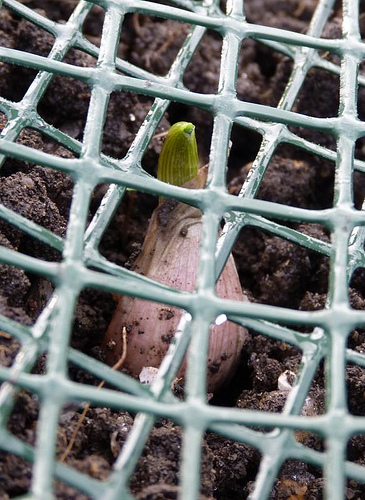
    Planted garlic, shallots and some onions – but I had to break the four year rotation. I hope we get some more land this winter: we put ourselves at the bottom of the waiting list on suggestion from the previous allotment manager in May. The hype for allotments seem to have passed already, and there is more turnover as a consequence.

    Who knows, the allotment management processes are rather opaque… for example turns out that allotment managers are elected annually by the tenants… 3 have changed in the last three years and I never had any opportunity – request or notice – to vote anyone. And when I put myself forward as a deputy – as I got the impression there was noone – the manager never got back to me with a final answer, then I found out by chance someone else had been appointed. Not exactly how I had expected the UK system would work when I came over: in my naivete I thought it was all about fairness! In this case at least, not much difference from Italy instead.

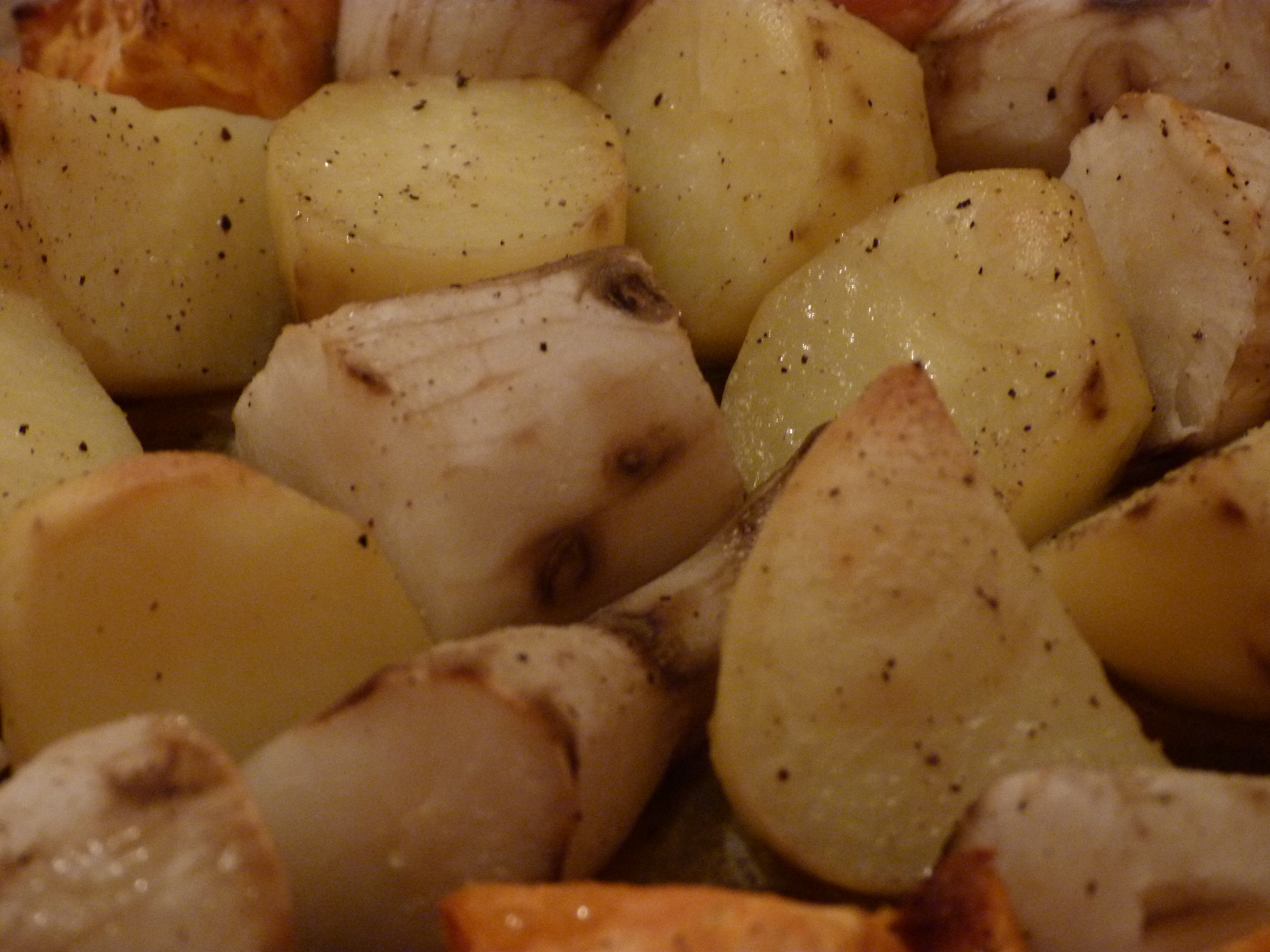
    Anyway – jerusalem artichokes are in season on my plot and I am on my way home to cook some for dinner. May post a pic – by the way, you may have noticed I am not writing much, and you are right: cannot bear any longer to look at a computer screen out of office hours…

    — Post From My iPhone

  • I miss my plot!

    On Saturday I spent most of the day digging, my favourite activity as you will know, and it reminded me how much I miss my plot now that the days are short.

    I have run out of rotation space, so I will have to reuse beds from a couple of seasons ago for my garlic. Unless I pull all of the beans, which are still cropping, and reuse the beds. Or maybe I will have to do both. Advice from anyone?

    The grapes were a fantastic success, much more than expected, and I will take advantage of my recent learning about cuttings to extend my “vineyard”. Figs, on the contrary, have been so disappointing, as they do not seem to ripen – any of them.

    Manure was delivered: I covered it with plastic sheeting as I read that it is best spread in early spring, lest the nutrients wash out during winter. I got a full load as last year I gave it a miss, and checked with the farmer that no chemicals were used in the foodchain of the horses: I was really worried about contamination by Aminopyralid. It should be fine, and apparently 3 months composting are enough to purify manure for organic use – can’t remember the source, but it was reputable.

    I find it still difficult to plan in crops of green manure…

    My chillies are still growing away under tents and in the greenhouse, but I am afraid I won’t be self sufficient on those: one of my objectives gone, despite all the space I devoted to chilli plants. Garlic could be enough if I use it sparingly… I have bought more for this year, and very expensive it was!

    I must say the slogan “grow your own to get cheap veg” does not seem to be working for me – definitely not. Did I mention before? It’s good for all other sorts of reasons except the return on investment. At least so far. But it is true that I have gone into it big time, probably more than most would. And I should go back to measuring and evaluating my crops more precisely: not very diligent, this year, Mrs Cecconi!

    On the feel of it I would say my best veg crop this year has been cucumbers, tasty and of impressive size. Fruit-wise, definitely raspberries: they are still cropping but mould very quickly if not picked.

    Overall, I would say I had more variety than in previous years but in smaller quantities. Have to do better!

    But I will not be able to go now until next week 🙁

    — Post From My iPhone (sorry for the funny words, the automatic spellcheck is a nightmare!)

  • Call it love from a distance

    I have not forgotten the allotment, or the blog, but everyone returning to work in the office after the summer has meant late hours, and days are drawing in. Weekends have also been busy…

    But if you saw someone last night after sunset, in the pouring rain, picking grapes and rocket leaves, that was me! Seemed silly this morning, as I walked to the station in the warm sun, but that was the only sure time I could go.

    There’s still a lot going on: salad is slowly but steadily growing, the pumpkins have not grown big but are ripening, the vine has made so much more grapes than I expected (I could not see them among the lush leaves), raspberries are still fruiting, the Jerusalem artichokes are flowering so I guess they are ready, and finally the spinach I sowed in the newest bed I made is germinating…

    In terms of looking forward, I am desperately late in getting the broad beans and garlic for next year, of all years the one when there seem to be a garlic shortage, so hurrying to get some would be in order! To boot,aAll my gardening magazines’ subscriptions are expiring and I cannot find the time to renew them (well, not that I have read much of them lately anyway…).

    Gosh, anyone else in such a terrible situation?!?

    Looking forward to November, when the workload should fall back into its own right place.

    — Post From My iPhone

  • Green tomatoes


    You are looking there at my latest nightmare.

    It was 4.5 kg San Marzano and 1.1 kg cherry tomatoes to process as quickly as possible, before the blight set in.

    Not a chutney person, I started a recipe research: there are hints here and there that green tomatoes may contain the poisonous alkaloid solanine (typical of the solanaceae family), but that is not proved and I found an interesting article on the NY Times about tomatoes, poisonous food and the little we know about it and several recipes to avoid crop waste. I guess moderation in eating is always key…

    Anyway, after trying deep-fried green tomatoes in a batter of egg and a dusting of cornflour (and not being overenthusiastic about them), I turned to Italy for inspiration. Two recipes I found particularly appealing: jam (which is rather less complicated and tastes delicious) and preserve in oil (which takes five days to prepare but smells lovely: taste trial in two months!)

    Here’s the links to the recipes that inspire me, loosely translated underneath. Of course, you need to sterilise the jars and the preserve as per best practice. 

    Green tomatoes preserved in extra virgin olive oil

    Slice the tomatoes, cover in salt for 24 hours, squeeze them dry, cover in white vinegar for 4 hours, squeeze them dry again. Place in a jar with pepper, oregano, slices of garlic and a few bay leaves before covering in oil. 

    Green tomato jam

    Blanch the tomatoes, peel them and remove the seeds. Add the juice and zest of a lemon and half a kg of sugar for each kg of tomatoes. Leave the mix to infuse in a bowl for 12 hours, then cook and can as you would do any jams. 

    Green tomatoes preserved in extra virgin olive oil

    You need properly green tomatoes so they do not soften up too much with time. Rinse and slice them in stripes, which you will put in a large glass or ceramic bowl.

    Cover in salt and with clean hands stir it in well. Cover the bowl and leave for 24 hours. 

    After that, pour them in a colander or sieve, and, in order to squeeze them well dry, place some heavy weight over them (i.e. a pan full of water).

    Cover them and leave for another 24 hours.

    The next step is to cover the dry tomato strips in vinegar in a clean bowl, untangling them with a fork so that the maximum surface is exposed to soak up the vinegar. Leave them for another 24 hours.

    Squeeze them dry once again.

    Aside, mix some finely chopped parsley (a herb mill is ideal), garlic, chilly, oregano and extra virgin olive oil.

    Pour the mix on the dry tomatoes, stir it in, cover the bowl and leave for another 24 hours to soak up the flavours.

    Finally, it’s time to can them: put a little oil in the bottom of the jar, then add the toms, pressing them well. Cover with oil, seal and keep in a cool and dark place for at least 3 months before using.