Orto di Casa Cecconi

My first allotment, and then one thing leading to another…

  • Another week goes without sowing

    Not the best year for my sowing, isn’t it?

    But I managed a couple of hours on Saturday and cleared another bed, on one side of the greenhouse, which I will use for winter salad and maybe my one artichoke.

    Study is progressing: I am now on fruits. There are plenty of new terms to learn, and I desperately need some time to sit down and make tables and graphs, as it seem that’s how I learn best.

    For example, I learned this morning that the strawberry is a false fruit, as the flesh does not come from the ovary but from the receptacle. The actual fruit of the strawberry plant are the little beige seeds you can spot on the surface, dry fruits of the type achenes.

    Just occurred now that, besides my graphs and tables, I may make special plant cards for the most significant examples…

    — Post From My iPhone

  • Doom and gloom?!?

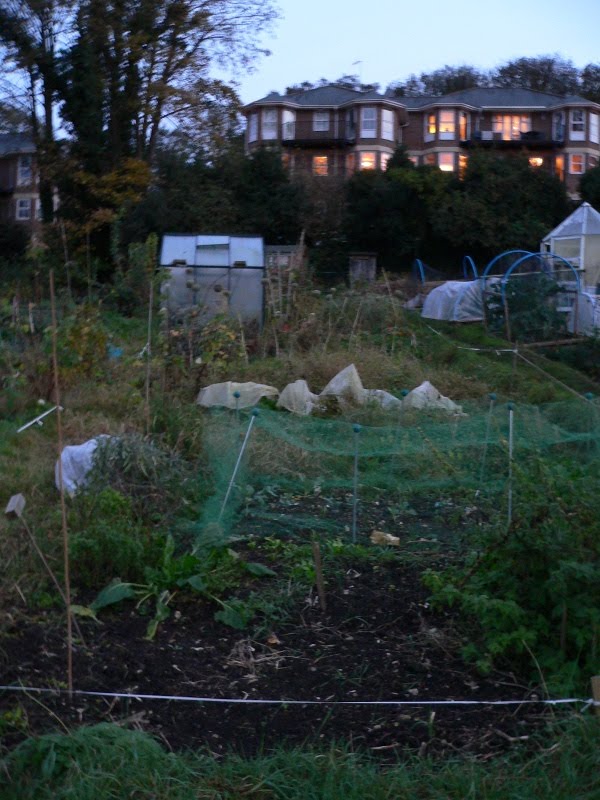
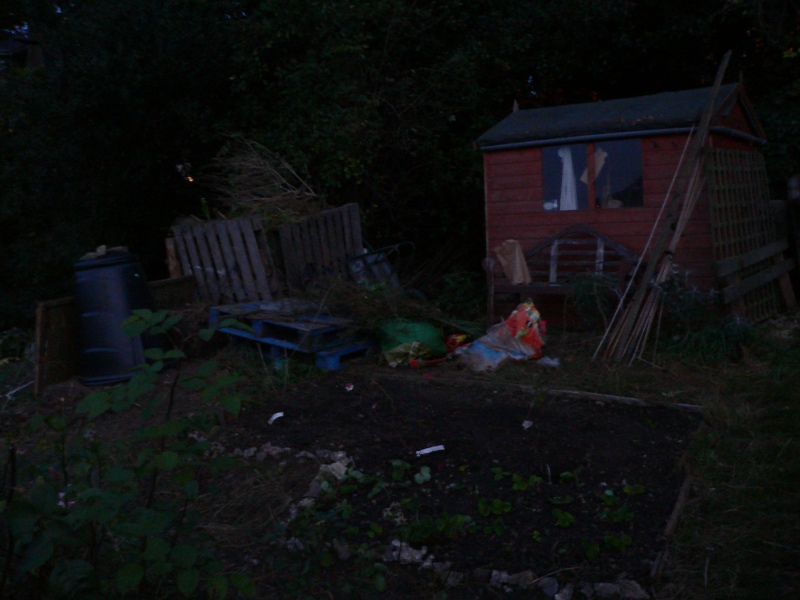
    I have no pumpkin to show you for Halloween. Just some more or less ripe tomatoes, a handful of raspberries and a good amount of spinach beet. And a pretty un-spooky picture of the plot at sunset.

    Moreover, I am afraid I am not in too good a mood to write either: stressful times with the builders at home, and I had to spend my week nights writing recorded letters in reply to their bullying.

    After studying the flower *yes, I mean the flower stamen pistils and all* in the library this morning while it rained, I went to the allotment this afternoon as soon as the sun came out, all eager and hopeful for a relaxing time.

    My first sight as I passed through the allotment’s gate was a child running around my plot and suddenly disappearing. You have to know that my allotment is sunk, the path being some twenty centimetres above it. That was not a good omen. When I came close, the reason for the disappearance was clear: my blooming neighbour, whose party the child belonged to, had as usual left all his blooming stuff in the path and the blooming kid had fallen in my plot, leaving a nice footprint in my leeks’ bed. Not only that, but his blooming mother took my plot for the blooming path and just felt free to use it to walk in.

    You might have understood I WAS FURIOUS – but a select few may also appreciate my sense of humour. So furious was I, that I thought the time was come finally to tell Keith it was unbelievably annoying that he treated my allotment as his service area. He had the cheek to rebut that he did not know I was coming and mutter he has to pick his crops (what that implies in terms of how he moves around when I am not there I cannot quite bear to think)… I was too angry to utter anything sensible so I kept quiet. I should have told him that he was supposed to use the space on his plot to move around, leaving some walking and working space around the beds. I should have said that if I had walked on his blooming beds he would not be blooming happy, would he?

    We were talking just last week with Nikki and Tom about people who take a lot of liberties, even as crop-damaging as walking dogs on seed-beds, with other allotment holder’s plots.

    Anyway, I just gave up sowing my broadbeans (which was the plan for today), and demarcated the boundary with a line instead. I will have to buy a thick and colourful rope as some other people did (wonder why ;-p). There is a naval shop near my office, come to think of it.

    After that, my sowing mood had gone, so I cleaned the shed from top to bottom. It was relaxing in a way, I had a good time after all, and I made sure there were no rats in the shed, which was fear.

    But I could have done without that just today. Maybe the weather will keep tomorrow… tomorrow is another day.
  • When duty calls…

    … you cannot stay on the allotment all day, especially if duty calls from down a drain, the one that collects kitchen + washing machine…

    Nonetheless I managed to spend 3+ hours on the plot, which now looks amazingly tidier.

    Unfortunately I did not sow any seeds: I find it takes a certain mood setting and preparation for me to start a sowing job; digging comes much more naturally to me when I have just scraps of time.

    But I did a fair amount of work, so I am pleased.

    I tried the smell test on the currant’s cutting I planted last week, and it must be redcurrant as there is no smell from the leaves. I have continued filling the bed with more strawberry runners, and had to dig a new one for raspberries, which I also filled.

    The garlic bed is ready for planting and there is also an extra one behind the vines, where spinach beet (Chenopodiaceae family) was growing as self seeded plants.

    When it comes to rotation, I still do not know by heart the four-year scheme, let me have a look.

    … > A Solanacee, Cucurbitacee > B Papillonaceae, Alliaceae >
    C Brassicaceae, Poaceae > D Chenopodiaceae, Apiaceae > …

    It seems Solanaceae or night shades, and Cucurbitaceae or pumpkin family come after Chenopodiaceae: all things that can only be sown from spring onwards. I may use the bed for some salad over winter (with the exception of rocket, mizuna and other orientals which are Brassicaceae, salad is in fact outside the rotation), but I am not sure that it is sunny enough up there.

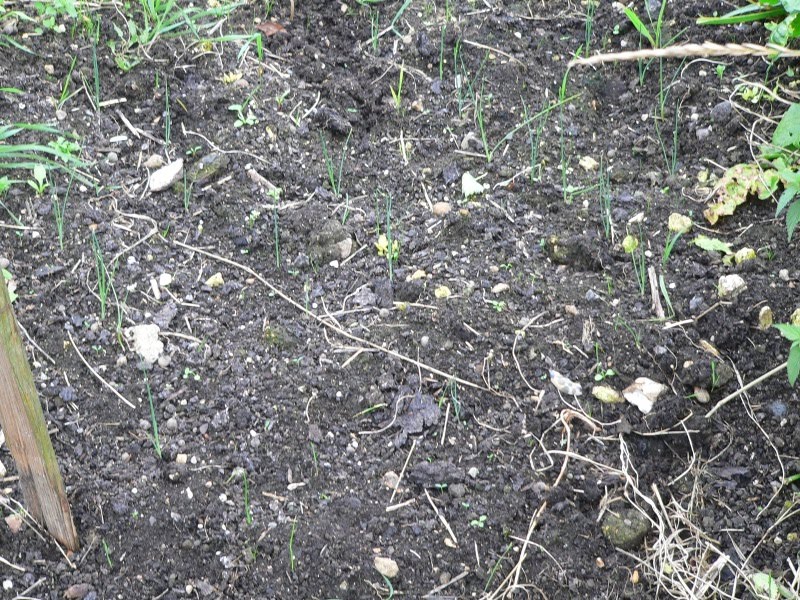
    Cropwise, the leek seedlings seem to be growing, but they are still just seedlings as you can see: nearly invisible. The brassica (shush, just in case any slugs listen in) seem to be doing well and I am still getting fairly ripe tomatoes – albeit very small ones – and raspberries. I also picked three half empty cobs, whose other half was delicious.

    A full week to go to the next allotment time.
    My study should keep me busy in the meantime, and the town library supplies interesting related readings.

    The edifying closing thought of today I take from an RHS book on pruning I read last week:

    pruning is not generally done in autumn, as this is the time of the year when most fungal spores are in the air, making it the period in which the pruning wound is at greatest risk of an infection that can be lethal. 

    Never thought of that, but makes sense after learning that leaves have breathing pores on the underside of the blade, so as to avoid spores landing on them and getting in.

  • Great autumn day!

    Had a great time on Sunday when I spent most of the day on the plot.

    The weather got increasingly better during the day and it was warm. So much so that tomatoes are still ripening, and there’s still plenty of flowers: blue borage, cascades of orange nasturtiums, tiny white thyme flowers, yellow coreopsis, even one calendula bud. And pretty strangely, in the greenhouse, tomatoes and chillies are still flowering. And there are a couple of strawberries, that I found clearing one of the old beds.

    Soft fruits were, in fact, the main task of the day: making a new bed where to plant my new blueberry Earlyblue and the strawberry runners. The new blueberry is now in its home, and I transplanted the old one (Top Hat) as well. With just one type of strawberries – Judibell – I filled half of the space: they did not crop but made tons of healthy vigorous runners. I also transplanted all the new gooseberries: Captivator – purchased, a cutting from my heavy cropper (pre-existed me at the allotment so I have no clue what it was) and a self seeded plant I found clearing the kiwi fruit bed. I added a currant cutting to fill up the space (not sure which currant – red or black – and I forgot to try the smell test: blackcurrant leaves, if rubbed, smell like the berries). It does look fantastic, I must say, especially as it is near the shed, which I cleared of the old fence panels I had propped against it. Nice and tidy (almost) now.

    Unfortunately I did not do any sowing, but started covering the herbs bed, with the fennel plant. The rich aniseed smell of the chopped stems stopped fellow allotment holders in their path as they were leaving, so I decided to make good use of them tied in bundles in my cupboards. Not sure if the smell is going to last but it was worth a try.

    It was dark already, and, after quickly throwing some fleece on the last outdoor tomatoes, I had to make my way home. Not before taking a picture for the record of my ‘masterpiece’ in the fading light, though.

    Tired I was, and happy.

  • Did it freeze this week?

    Following a forecast of freezing I braved the night on Monday to cover up my aubergine (40 cm of stem, 5 leaves and a flower is all I got this year) to try and preserve it for next year’s cropping.

    I also retrieved my half-used packets of seed to complete my stocktaking, and I am pleased to say that it is now done: not counting the seed I saved from peppers & pumpinks of Riverford origin but counting the perennial plants, I have c 240 species in stock, which means 20 a month to sow! ;p I am not buying as many seeds as I used to nowadays, though, which is an improvement.

    Found another task for the weekend as well: cover the herbs as it’s almost November! The herb bed is the first thing I created at the allotment in Sep 2007, and I must say it is thriving, with only 2 plants lost: one thyme and one chamomile.

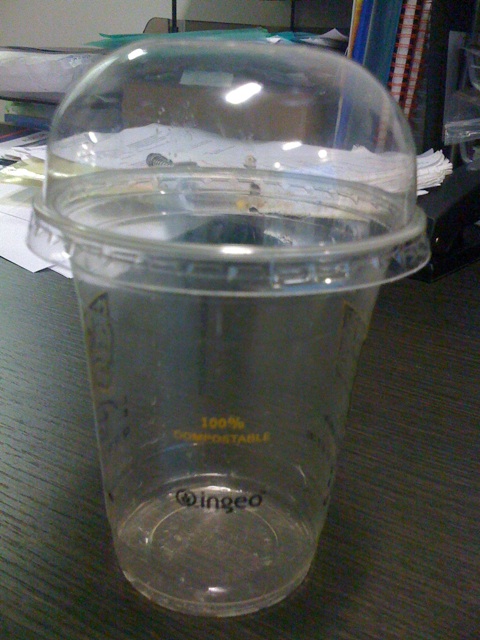
    Compost piles & bin still need some adjusting, and I want to test the compostability of a plastic cup they gave me at the shop below the office. It would be great if it really worked: I am hating plastic more and more, although it’s difficult to think of life without it.

    Study-wise is not going too bad, although I am finding the course books a bit confusing, so I need extra research to clarify many points and square the circle, so to speak. YouTube and the Internet helped a lot, as well as the Capon’s book I mentioned last week.

    I am now on the topic of tissues, and it is fascinating to understand how plants are made and work inside.

    A curious fact: aubergines contain nicotine (source Wikipedia). Fancy smoking an aubergine… how to demystify the addiction! Sorry, I’m being facetious now 🙂

    — Post From My iPhone

  • Stocktaking once again

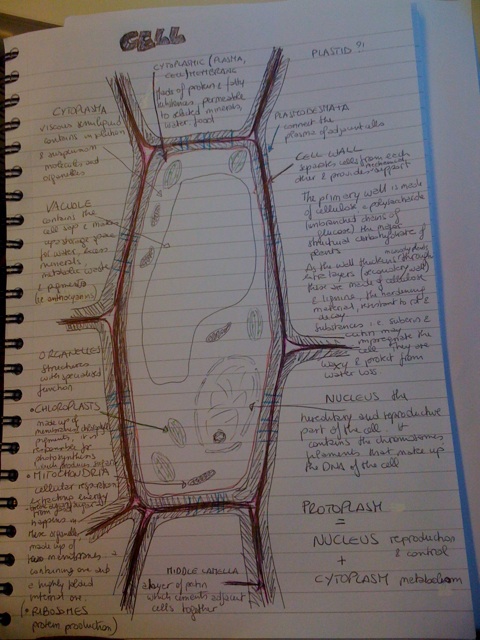
    Stocktaking: seeds and produce, and plants cells

    Making the most of a weekend in the house, I started my annual seed stocktaking. It takes a lot of time and I have not learned to use it in the most effective way for my planning, but I think it is worthwhile to persist.

    Unfortunately this year I have been very bad at recording crops and produce. I only know that I made 22kg of potatoes (half compared to last year), a bucketful of onions & shallots (of unspecified weight), more garlic than last year but still not enough for my consumption, more than enough spinach beet, some broadbeans (enough to store some freezed but less than last year), plenty of strawberries, just enough raspberries, too many gooseberries. And some turnips, courgettes and beetroots. Plus a couple of salads’ worth of ripe tomatoes (many more than last year), two cucumbers and a negligible amount of beans. And and let’s not forget a bonus of damsons from the hedge at home. Not very specific, uh?

    It has been a very different year from last year, in terms of weather and my time availability, so it is difficult to draw general lessons. Certainly I have had success in growing a greater variety of crops, and I seem to have a better grasp of the seedling process (although there seem to be a stage beyond which many of them don’t seem to grow any further and sooner or later perish).

    Well, there are still seeds to sow and things to do this year. Let’s hope next weekend nothing goes wrong. For a start, I am planning to cover my only aubergine and try to keep it for another year, if it survives the winter. There’s my blueberry and artichoke to plant, and all the chrysanthemums I bought to cover the ground over winter, although some green manure can still be sown: Hungarian grazing rye is at the limit of sowing time, but field beans are still ok. And then broadbeans are ready and garlic, although Paolo at Seeds of Italy thinks it’s still too early to plant it this year, because of the good weather.

    And I will leave you with the edifying thought that potatoes are tetraploids (they have four sets of chromosomes instead of two as ‘normal’ plants have) and the mentioned chrysantemums have six sets – not clear yet how and why, but you will have understood that my current chapter in the course is cells growth and reproduction.
    Here is my beautiful (copied) drawing of a plant cell.

    — Post From My iPhone

  • KO: not digging but the flu!

    It seems my headache on Sunday might not have been caused solely by digging, but by some virus, as it turned out I’m having the flu this week.

    I’m writing in one of my few waking moments, which means, in turns, that I am not making much progress on my first horticulture lesson, which is about plant classification and nomenclature.

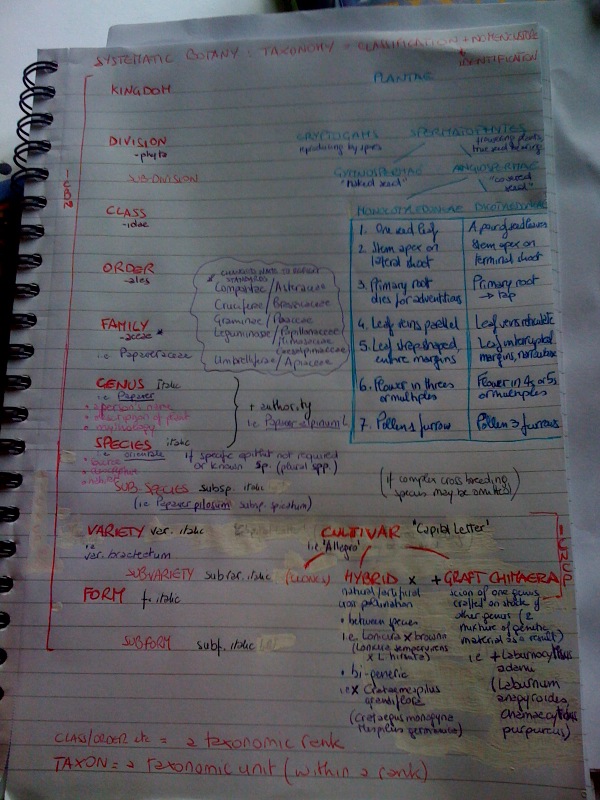
    I will attach to this post a graph of the plant kingdom (when I get round to finish it), in the meantime I’ll leave you with a quote from Shakespeare, cited in B.Capon’s Botany for Gardeners:

    “What’s in a name? That which we call a rose by any other name would smell as sweet.”

    Alas it rings so true while trying to memorize plant variants on a headache!

    P.S. As you can see, my graph is a bit of a battlefield and took one week to put together (in my present condition), but I think I have captured most of the concepts that needed capturing… Oh, no, just realised I have forgotten something: a list of the 6 plant’s features: chlorophyll, roots, leaves, stems, flowers, seeds.